
First published on the Le Press Hazratganj blog. Preserved here with its original date and text; references to venues, events and plans reflect the time of publication.
The Newal Kishore Press played a significant role in shaping the visual and cultural representation of Indian deities during the 19th century, particularly through the publication of calendars and almanacs. These calendars became a powerful means of both spreading religious devotion and reinforcing cultural identity, as they provided an accessible medium through which millions of Indians could connect with their gods and goddesses.
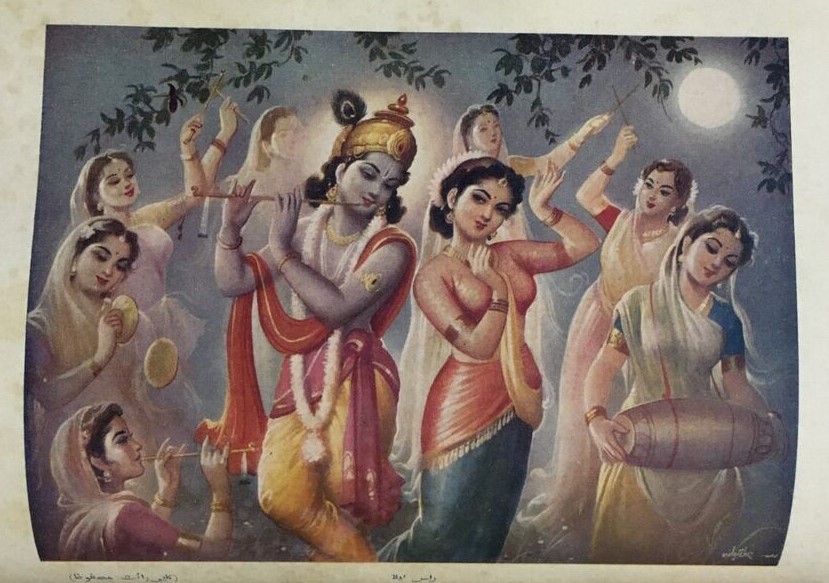
Newal Kishore Press hired artists like Mulgaonkar to paint images of God and Godess in their books and Calenders
1. The Role of Calendars in Religious and Cultural Life
In 19th-century India, calendars were not just practical tools for tracking time; they also served as important cultural and religious artifacts. Calendars were often illustrated with vibrant depictions of Hindu gods and goddesses, and these images became central to everyday life, especially for those living in rural areas where access to art and literature was limited.
Calendars as Religious Symbols: The Newal Kishore Press produced and distributed wall calendars that featured images of deities such as Lord Rama, Lord Krishna, Durga, and Shiva. These calendars provided visual representations that made divine figures more tangible and accessible to the public.
Widespread Distribution and Impact: By printing these calendars and making them widely available across regions, the press helped elevate the visual culture of Hinduism in India. The images of gods and goddesses, often paired with important religious dates, became familiar to people in their homes, temples, and marketplaces. The visual depiction of these deities had a profound impact on religious worship and devotion, as it brought divine figures into the daily lives of the Indian populace.
2. Artistic Representation of Deities: A Fusion of Traditional and Modern Styles
The Newal Kishore Press was known for its meticulous and colorful illustrations. It employed skilled artists to create detailed and often larger-than-life depictions of Hindu gods and goddesses, making them visually prominent and emotionally resonant for the viewer.
Mythological and Iconographic Accuracy: The press ensured that the artistic representations adhered to traditional iconography while also infusing a modern artistic sensibility. For example, Lord Vishnu was depicted with his four hands, holding the conch, discus, mace, and lotus, while goddess Durga was shown riding a tiger, slaying the buffalo demon Mahishasura. These images adhered to scriptural depictions but were made more vivid through the vibrant color schemes and dynamic compositions used in the illustrations.
Innovative Artistic Techniques: In an effort to reach a broader audience, Newal Kishore’s press used lithographic printing techniques, which allowed for the mass production of images with greater clarity and color vibrancy than previous methods. This ensured that these religious depictions were not only affordable but also eye-catching and widely circulated, giving the Indian gods and goddesses a standardized visual form that could be recognized across India.
3. Connecting Gods and Goddesses to Local Communities
The calendars published by the Newal Kishore Press were not only devotional but also helped connect local religious practices to a wider national identity. The imagery in these calendars was often tailored to local religious and cultural contexts while still drawing upon pan-Indian religious symbols.
Local Variations in Iconography: While the core symbols and iconography of deities like Lakshmi, Saraswati, and Shiva remained consistent, the press sometimes adjusted certain elements to resonate with local traditions. For example, Durga might be depicted in a manner that reflected the specific way she was worshipped in different parts of India—either riding a lion or a tiger, or with specific weapons symbolic to that region’s local festivals.
Calendars as Educational Tools: These calendars were often used to educate people about religious festivals, auspicious dates, and rituals associated with various gods. For example, Rama Navami, Navratri, and Diwali were marked on these calendars, with illustrations showing gods and goddesses involved in these festivals. The pictures became associated with the celebrations themselves, helping to integrate visual representation with the religious calendar of festivals and rituals.
4. Cultural Reinforcement and Identity Building
The calendars also played a key role in reinforcing a collective Indian identity, particularly in the face of British colonialism. Through the visual representation of Hindu deities, the Newal Kishore Press helped to assert and preserve traditional cultural values and religious practices at a time when colonial forces were attempting to impose their own norms and lifestyles.
Symbol of Resistance: By distributing these calendars, which showcased the grandeur of Indian gods and goddesses, the press subtly resisted the colonial mindset that often belittled or dismissed indigenous traditions. These images became a form of cultural assertion, reinforcing the idea that India's religious and cultural heritage was rich, varied, and deserving of pride.
Strengthening Hindu Nationalism: The visual prominence of Hindu gods and goddesses also contributed to the growing sense of Hindu nationalism in the late 19th and early 20th centuries. Figures like Swami Vivekananda were promoting the idea of Hinduism as a unifying force for the Indian population. The Newal Kishore Press’s calendars helped in furthering this movement by providing everyday reminders of India's spiritual legacy, nurturing a sense of unity and pride in Hindu identity.
5. Examples of Popular Calendars Published by Newal Kishore Press
The Newal Kishore Press was particularly known for its Hindu devotional calendars, which featured the following:
Calendar Depictions of Lord Rama: During the festival of Rama Navami, the press would publish calendars with artistic representations of Lord Rama with his bow and arrow, accompanied by scenes from the Ramayana, particularly of Rama’s battle against the demon king Ravana.
Krishna and Radha Calendars: The press also printed Krishna-Radha calendars, which were extremely popular during Janmashtami, the festival celebrating Lord Krishna's birth. These calendars depicted the divine couple in various stages of their divine love story, emphasizing the devotional aspects of Krishna's life.
Shiva and Parvati Calendars: In regions where the Shiva cult was prominent, the press published calendars that depicted Lord Shiva in his traditional pose, holding his trident, seated in a meditative state, often with his consort Parvati and sons Ganesha and Kartikeya. These calendars were especially popular during the Mahashivaratri festival.
6. Legacy of the Newal Kishore Press in Religious Iconography
The Newal Kishore Press's calendar illustrations had a profound impact on the way Indians visualized and connected with their gods and goddesses. By creating standardized, widely circulated images, the press played a significant role in shaping the iconographic landscape of India, helping to preserve and propagate religious imagery across the country.
The press’s contribution to the visual representation of gods and goddesses through these calendars is one of the many ways it bridged the gap between the spiritual and the everyday, giving faces to the divine that could be recognized, revered, and worshipped by millions of Indians. Through these printed images, Newal Kishore Press made divine figures not just abstract ideals, but living, breathing presences that permeated the lives of ordinary people, further embedding religious devotion into the fabric of daily life.