
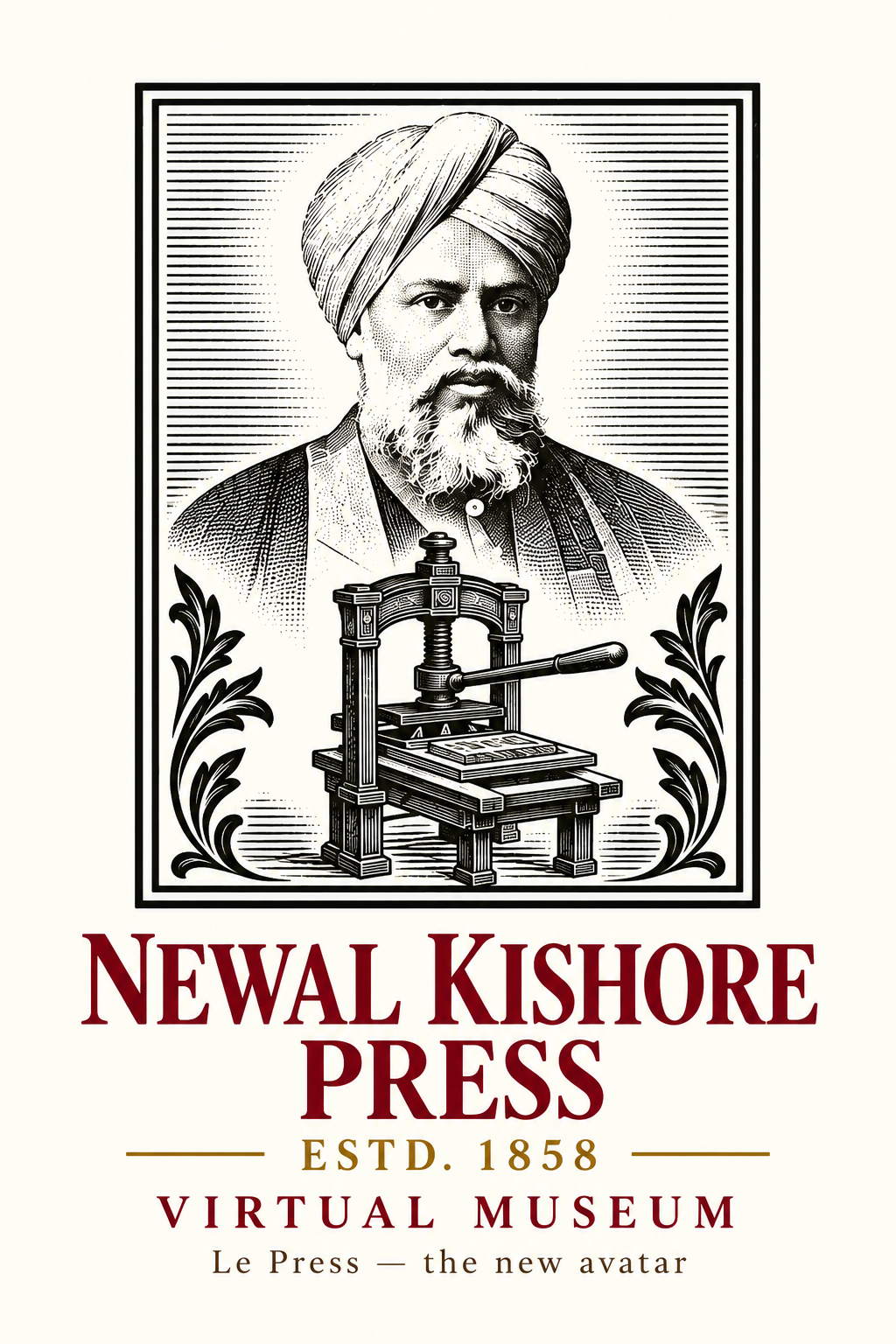
Munshi Newal Kishore establishes his press in Lucknow.
LE PRESS · HAZRATGANJ, LUCKNOW
An old press.
A living Lucknow story.
The Newal Kishore Press legacy finds a contemporary expression in Le Press: a heritage destination for art, craft, conversation and community in Hazratganj.
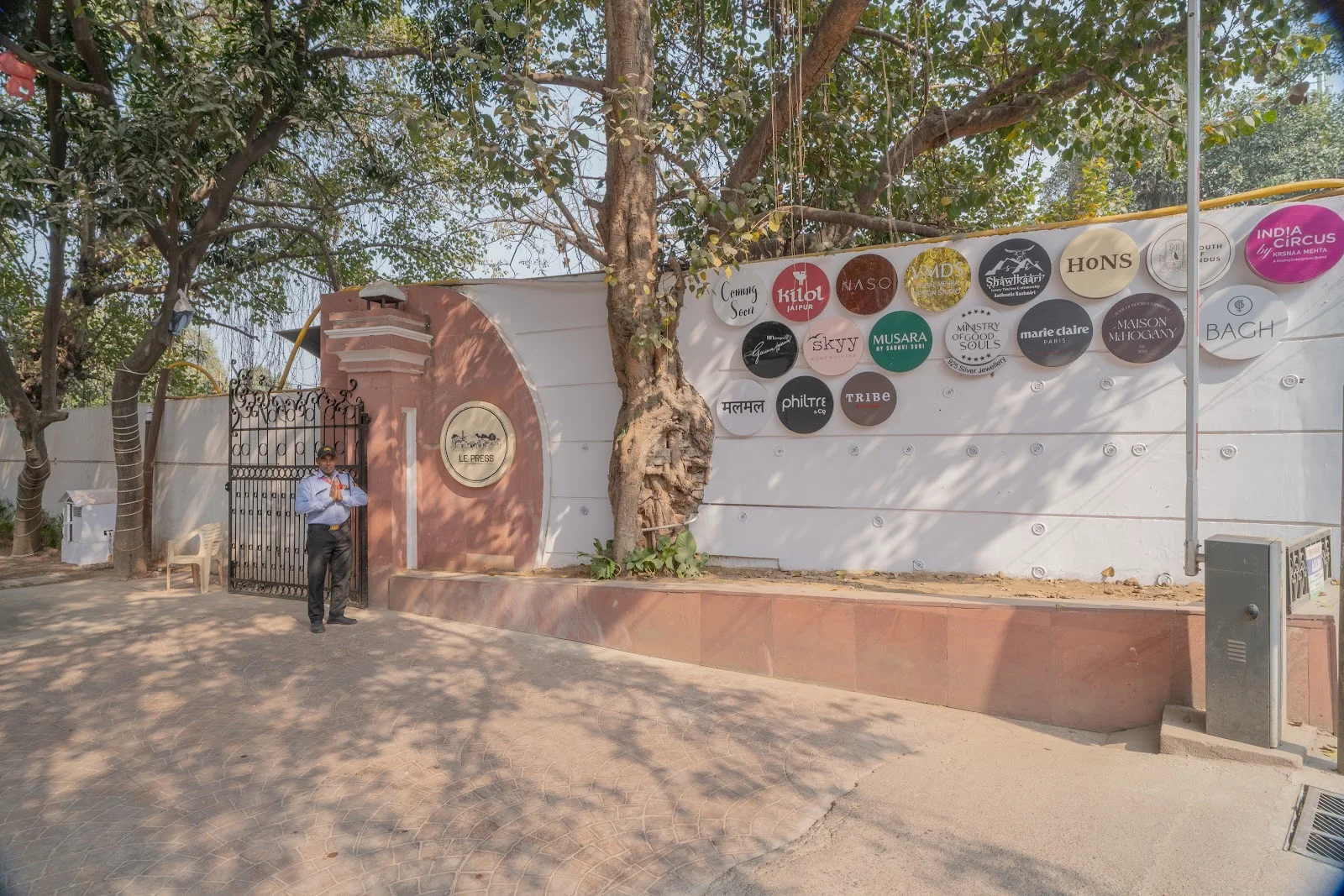
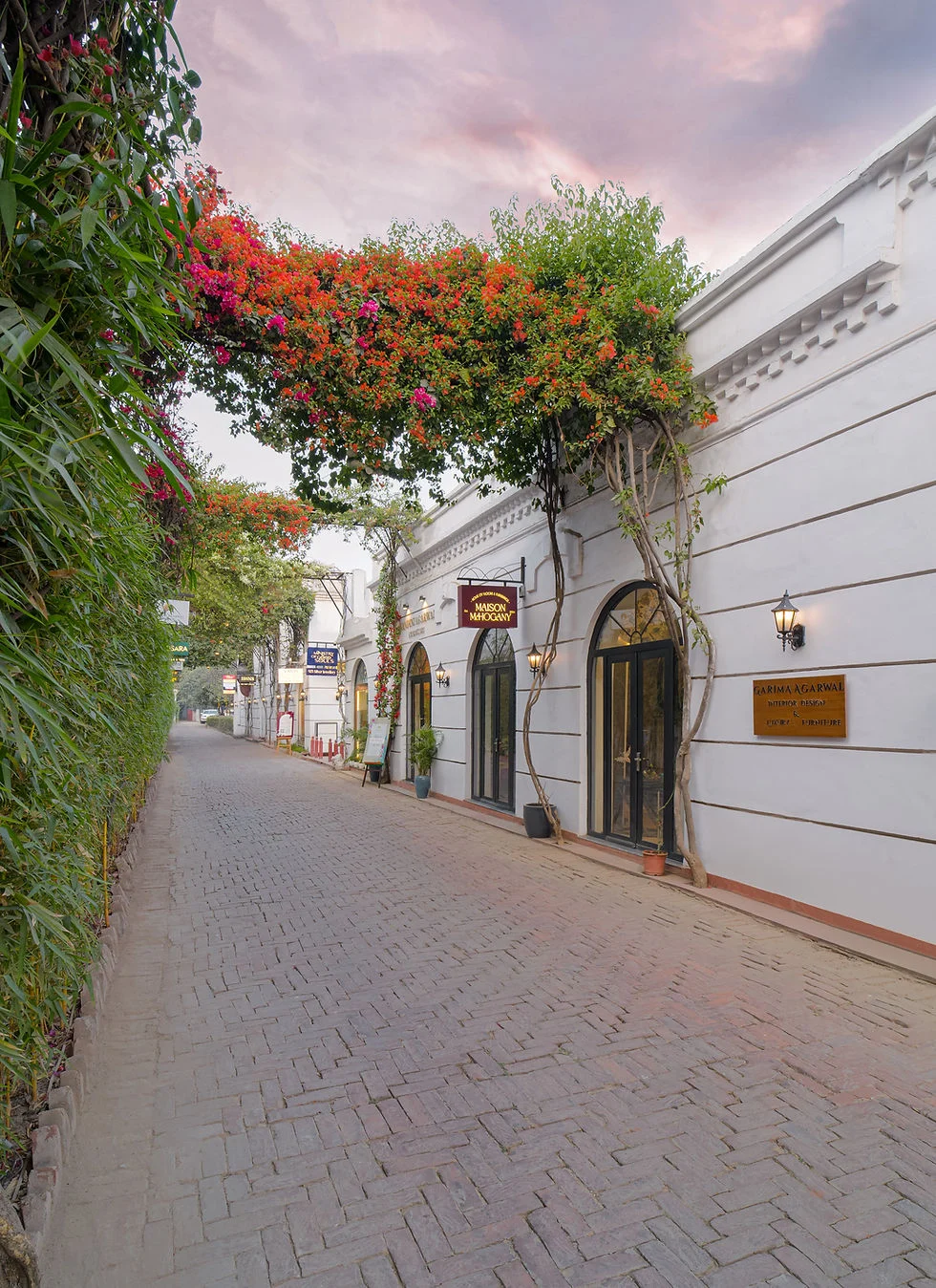
The Newal Kishore Press.
A legacy since 1858.
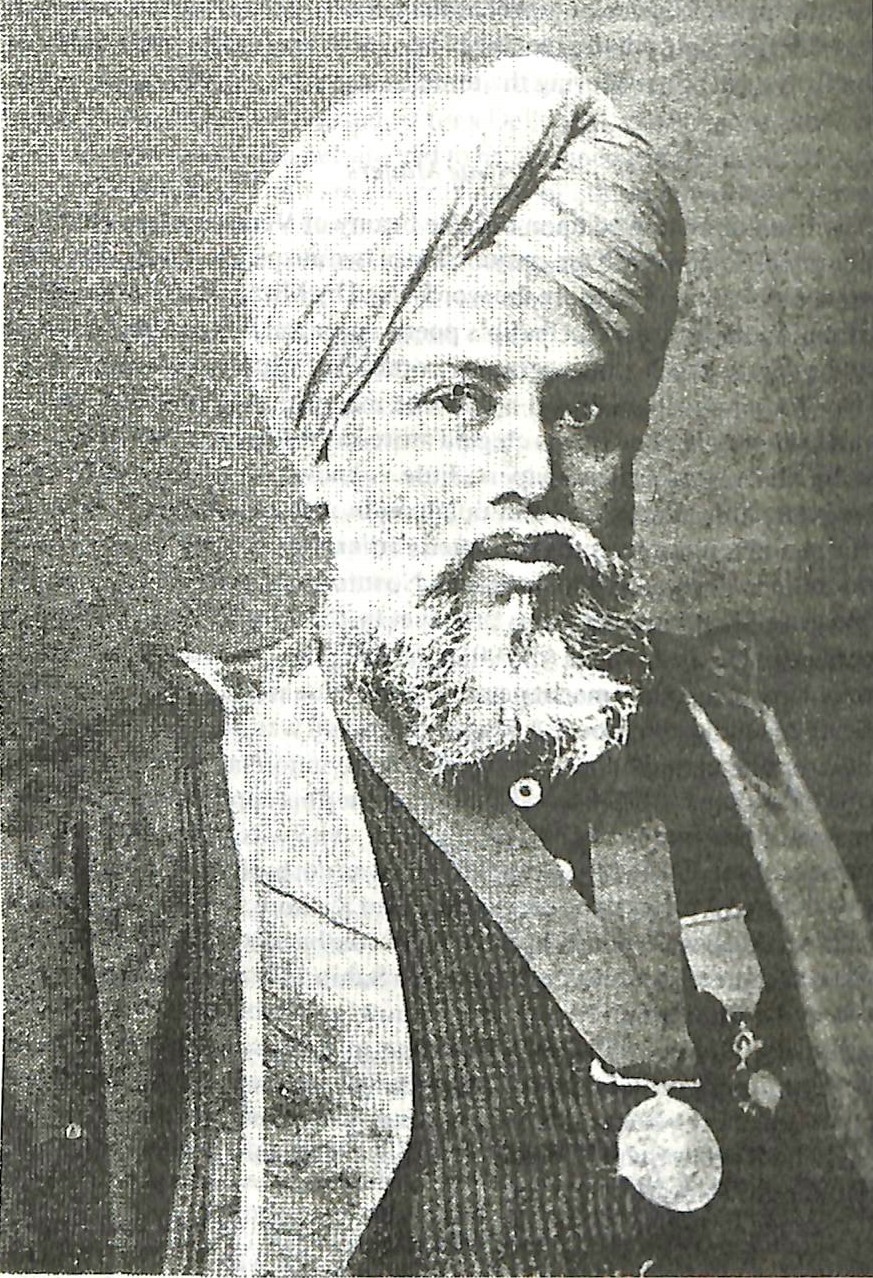
Historical portrait · Wikimedia Commons · Public domain
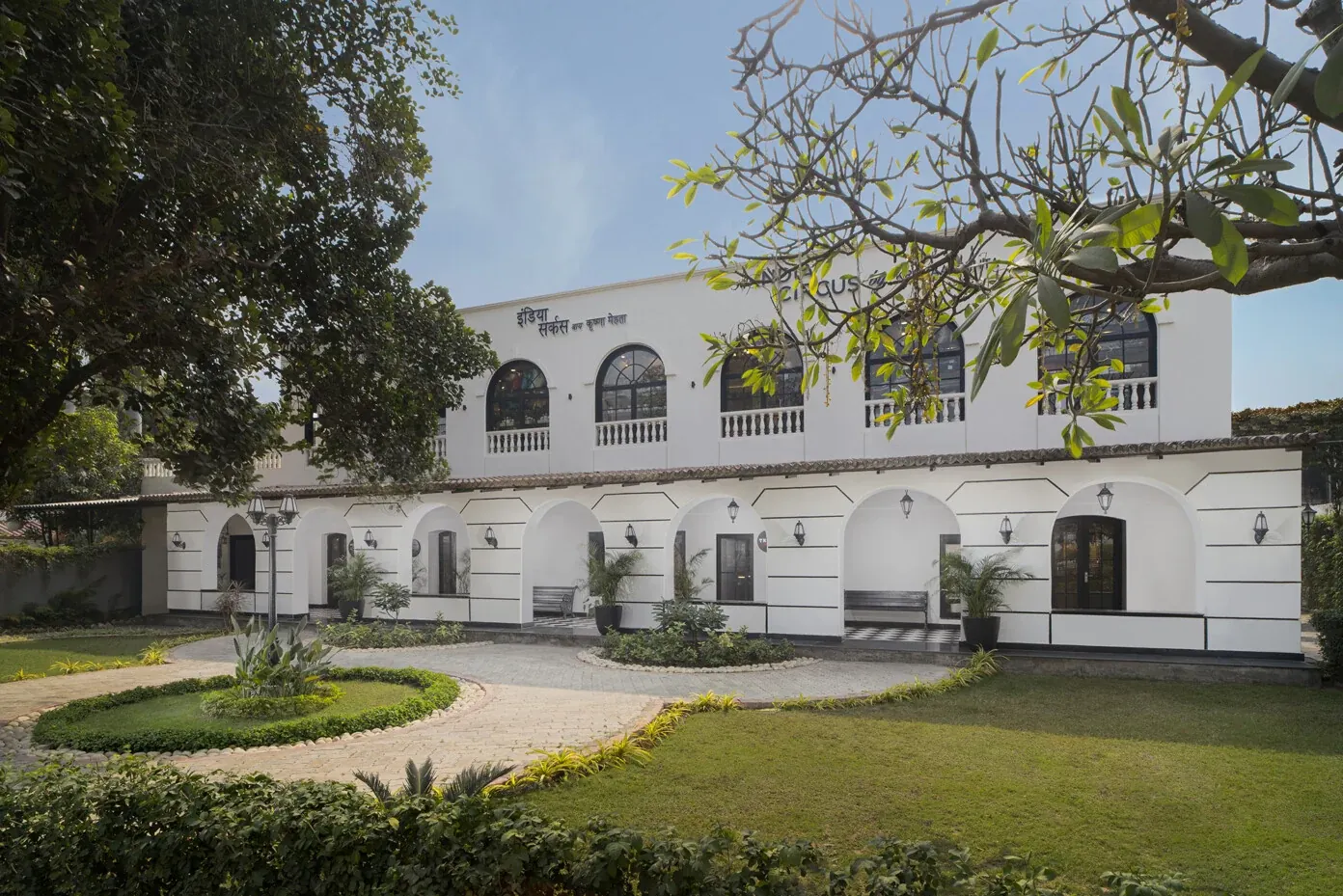
Le Press occupies the restored Newal Kishore Press campus in Hazratganj, Lucknow. Established in 1858, the printing house became an important centre of publishing and cultural exchange. Its legacy connects the printed word with the movement of ideas across languages and communities.
Today, shops, cafés, dining spaces and cultural gatherings give the campus another everyday life. The restoration keeps a place of memory in use: visitors encounter its architecture while meeting a friend, discovering a maker or coming to an event.
Explore the historical publishing collection through FID4SA’s digital text collections and McGill Library’s account of the Naval Kishore Press.
THE INTELLECTUAL LIFE OF A NATION
A press that helped India
read, remember and debate.
Newal Kishore Press belongs to the story of India’s intellectual awakening. Books carried inherited knowledge into new hands; newspapers made public affairs a shared conversation. Its importance lies in the readers, writers, translators and scholars it brought into contact — and in the cultural memory those encounters kept alive.
Titles issued during the founder’s lifetime, according to Heidelberg University Library.
Awadh Akhbar becomes a daily Urdu newspaper.
Premchand’s Shatranj ke Khiladi appears in Madhuri.
HindiUrduPersianArabicSanskrit
Preserving a shared inheritance
The Press published across these languages, bringing religious works, literature, medicine and educational texts into circulation. Its catalogue crossed the boundaries of faith and discipline. Printing and translation helped sustain India’s diverse traditions while opening them to successive generations of readers.
Explore the collection: Heidelberg University Library’s Naval Kishore Press archive ↗
NEWS · LITERATURE · PUBLIC OPINION
Awadh Akhbar.
Lucknow speaking beyond Lucknow.
Also known as Avadh Akhbar or Oudh Akhbar, the Press’s newspaper connected readers across northern India and beyond. News, social questions and literary writing occupied the same pages. Ratan Nath Sarshar’s Fasana-e-Azad reached readers through its serial instalments.
This was part of the expanding public life in which questions of reform, identity and nationhood were debated. The paper gave Indian readers a forum for public affairs, helping establish the habit of a shared political conversation.
Print, public debate and the rise of nationalism
The cultural influence of the Press and the political position of its newspaper are distinct histories. Historian Ulrike Stark documents both Awadh Akhbar’s public reach and its nineteenth-century loyalist, anti-Congress stance. Its contribution to the intellectual world of modern India deserves attention in that full context.
Read Ulrike Stark’s study of Awadh Akhbar, The Annual of Urdu Studies ↗
AUTHORS IN THE PRINTING HOUSE’S ORBIT
Ghalib. Premchand.
Words that outlived their age.
Mirza Ghalib
Rekhta preserves a Kulliyat-e-Ghalib edition bearing the Munshi Nawal Kishor, Lucknow imprint. It is a tangible connection between the publishing house and one of the subcontinent’s defining literary voices.
Explore the digitised edition ↗Munshi Premchand
Madhuri, published by the Naval Kishor Press in Lucknow, carried Premchand’s Shatranj ke Khiladi in 1924. The story’s journey into cinema offers a direct link between this publishing legacy and the screen.
Madhuri in the British Library archive ↗Frances Pritchett on Premchand’s story ↗LITERATURE · CINEMA · TELEVISION
Stories travel.
From page to screen.
Print gave stories another life. Filmmakers and television makers later reimagined them for new audiences. Explore the Press’s documented publishing connections alongside the wider literary culture of Lucknow that continues to inspire Indian cinema.
Shatranj ke Khiladi
Premchand’s 1924 story became Satyajit Ray’s 1977 film. Ray developed its portrait of chess-playing aristocrats into a larger account of Awadh on the eve of annexation.
Explore the film and its credits ↗Umrao Jaan
Mirza Hadi Ruswa’s novel inspired Muzaffar Ali’s 1981 film, carrying Lucknow’s poetry, music and remembered social world to the screen. It belongs to the city’s wider literary heritage.
Explore the novel-to-film connection ↗A note on the publishing history
The surviving 1899 edition is attributed to Munshi Gulab Singh & Sons. A Newal Kishore edition would need its own bibliographic record; the novel is presented here as part of Lucknow’s wider story.
University of Washington research, p. 54 ↗Alif Laila
Naval Kishore published an Urdu Alif Laila, also called Hazar Dastan. The Arabian Nights tradition later found a television audience through Sagar’s Alif Laila.
Read the publishing research ↗Explore Sagar’s television archive ↗Baital Pachisi
Research records Naval Kishore editions of this tale cycle in Braj Bhasha. The Vikram and Betaal tradition later reached television viewers through Vikram Aur Betaal.
Read M. K. Yadav’s publishing research ↗Explore the television legacy ↗For Alif Laila and Baital Pachisi, these are connections through shared story traditions. A direct adaptation from a particular Newal Kishore edition has not been established.
Why “Le Press”?
Le Press celebrates Lucknow’s Excellency Press. “Press” recalls the printing house and its role in sharing ideas; the French inflection expresses the cosmopolitan spirit of the present-day destination. The intention is a modern meeting place for cultures, crafts and people.
Lucknow’s broader architectural story includes the influence of Claude Martin and his Constantia, now associated with La Martiniere. That context is part of the city’s layered cultural identity. It is distinct from the later Newal Kishore Press story, whose chapter begins in 1858.
International art.
Encountered on a walk.
Murals by international artists give visitors another reason to look closely at the campus. Works by Charles Foussard and Olivier Kesadi bring contemporary visual voices into conversation with Le Press’s historic setting.
Make the murals part of your own walk between stores and courtyards. Discover photographs and artist links in the Le Press mural gallery, alongside the everyday life that surrounds these painted spaces.
Craft and the city.
The link between culture and commerce continues through the makers and design houses at Le Press. Lucknow’s Chikankari, Banaras handwoven sarees and hand-block-printed textiles each hold skills passed between people and generations.
Visit the shopping and craft guide to explore Nandini Agarwal Chikankari, Kaushyam, Kilol and the wider partner community. Speak to stores about the work, materials and care behind the pieces that interest you.
Gardens, gathering
and a sense of belonging.
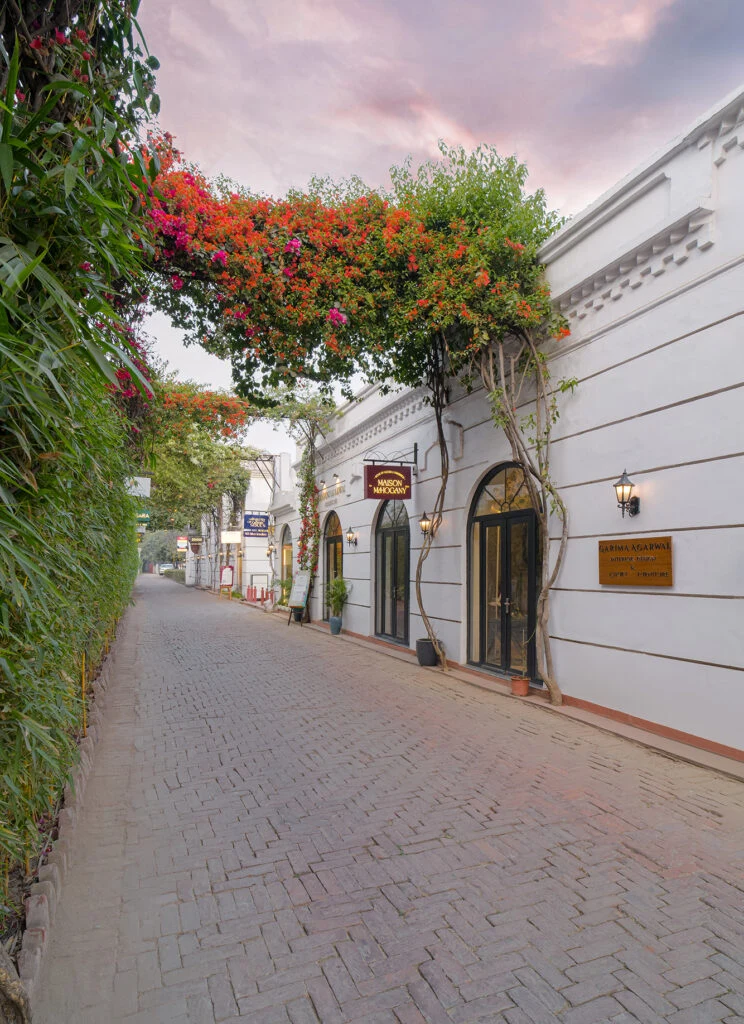
Hanging bougainvillea, manicured gardens and courtyards soften the rhythm of a day in Hazratganj. Indoor venues and outdoor spaces let different kinds of visits unfold on the same campus, from a quiet coffee to a cultural gathering.
Le Press’s event stories include Spring Soiree, Noël Christmas celebrations, qawwali nights, rock shows and DJ nights. These are part of our archive; follow current event announcements for confirmed dates and arrangements, including updates on Metaphor Lucknow.
The CFCPD manifesto.
A place worth caring for.
Gaurav Vatsa’s CFCPD manifesto connects Culture, Finance, Community, Planet and Digital. At Le Press, these ideas guide the continuing life of a historic place. Giving existing buildings a continued purpose, bringing makers into view and creating space for community are central to that outlook.
Sustainability begins with choices that can be seen and discussed: adaptive reuse, care for materials, a closer relationship with craft and opportunities to gather. Explore the CFCPD manifesto and the community invitation for ways to connect with Le Press around a creative idea, reading, pop-up or performance.
Explore the Newal Kishore Press Virtual Museum
The Newal Kishore Press Virtual Museum is available online now. Follow the journey from metal type to finished books in a 3D interpretation of the campus. The physical museum remains a planned project, with opening details to be announced.
VOCAL FOR LOCAL · THE CFCPD VISION
A platform for the people who make Lucknow.
Spring Soirée, Teej Festival, Noël and Winter Carnival bring together local entrepreneurs, curated collections and the city’s appetite for food, fun and shopping. Help shape the next discovery: suggest an experience, introduce your local business or offer to host a gathering.
AWADH AKBAR · THE LE PRESS MONTHLY
A new chapter for the printed word.
Read our English–Hindi October issue: Munshi Newal Kishore ji’s life, complete short stories, historical reports and Khoji’s comic.
Read online or download the PDF →YOUR NEXT LUCKNOW STORY
Come for a discovery.
Stay for the company.
Get directions ↗Join the Le Press Circle ↗LE PRESS · LIVING HERITAGE
Discover the working Press.
Newal Kishore Press Virtual Museum ↗ · Our appreciation of Uttar Pradesh’s tourism vision ↗
CFCPD · THE DIGITAL PILLAR
A printing legacy.
A new dimension.
Newal Kishore Press, established in 1858, finds its new avatar at Le Press. Discover an adaptive-reuse destination where a virtual museum, a 3D campus treasure hunt and living cultural experiences connect the printed past with the present.
About this content: archival material, modern interpretation and digital reconstructions have different evidential status. Read our reconstruction and accuracy notice and media-rights guidance.
Heritage tourism and conservation
HERITAGE, LOCAL ENTERPRISE & VISITOR EXPERIENCE
A future rooted
in our heritage.
Preserving a printing legacy, supporting local enterprise and welcoming visitors to Hazratganj.
Le Press’s approach is independently informed by Uttar Pradesh’s tourism policy vision. Policy alignment does not establish official recognition: this page claims no UP Tourism approval, certification, funding or determination of eligibility.
The Le Press commitment
Keep the place.
Keep its story alive.
A city loses part of itself when the places that shaped it disappear. At Le Press, conservation gives Lucknow's printing legacy a continuing public life.
The vision is to conserve the former Newal Kishore Printing Press campus while making it useful to another generation: a place for independent enterprise, craft, culture, learning and everyday encounters. Buildings carry the memory; the people who use them keep that memory active.
A shared direction
How our vision meets the tourism vision.
The following connections are Le Press's interpretation of the Uttar Pradesh Tourism Policy 2022.
Heritage with a new purpose
The policy recognises adaptive reuse of heritage buildings for tourism, subject to eligibility and review.
At Le Press: retained architecture becomes a setting for visitors, cultural discovery and contemporary use.
Policy: coverage, p. 6; §2.1.Opportunity close to home
The mission encourages private participation and local employment or self-employment.
At Le Press: local entrepreneurs, makers and hospitality businesses can connect with visitors in a distinctive Lucknow address.
Policy: mission, p. 7.Culture visitors can explore
Heritage interpretation and digital visitor experiences are policy priorities.
At Le Press: the virtual museum, 3D campus and QR guardian trail make the Press's story easier to encounter.
Policy: §2.1 and §7.9.3; category-specific conditions apply.This is an independent expression of appreciation and alignment by Le Press. It does not announce government endorsement, funding or a determination of policy eligibility.
Vocal for local
Conservation creates a place for enterprise.
A restored building needs a viable everyday life. Shops, food, cultural gatherings and creative work give visitors reasons to return and create opportunities for the people who care for the place.
Our ambition is a destination where a visit supports more than a purchase: it supports local skill, cultural exchange and the continuing care of a valuable part of Lucknow.
Meet the community vision ↗Culture · Finance · Community · Planet · Digital
The CFCPD lens.
Culture: remember the Press and the people behind its publications.
Finance: give conservation an enduring economic purpose.
Community: create opportunities to meet, make and participate.
Planet: retain useful fabric and explore responsible use of resources.
Digital: keep the archive discoverable and invite new generations into the story.
From an industrial campus to a living archive
Newal Kishore Press.
A story worth carrying forward.
Our virtual museum connects the founder's publishing legacy with the working spaces of the campus: composing offices, printing rooms, type-metal casting, stores and dispatch. It preserves access to the story while the physical museum vision continues to develop.
Begin the museum journey ↗