Lucknow · Three classics in the permanent collection
At the Lucknow Book Counter
Vikram’s last wish is that his stories should live on. Across from the page where he makes it, a Lucknow bookseller has printed a list of what to read next.
Three books on one counter
Open the right-hand column of the book list. Near the top is Indra Sabha in Nagari. Farther down is Singhasan Battisi. The list is bound into a third printing of Baital Pachisi, catalogued as 1877. It lets us see three classics as a customer of the Newal Kishore Press might have encountered them.
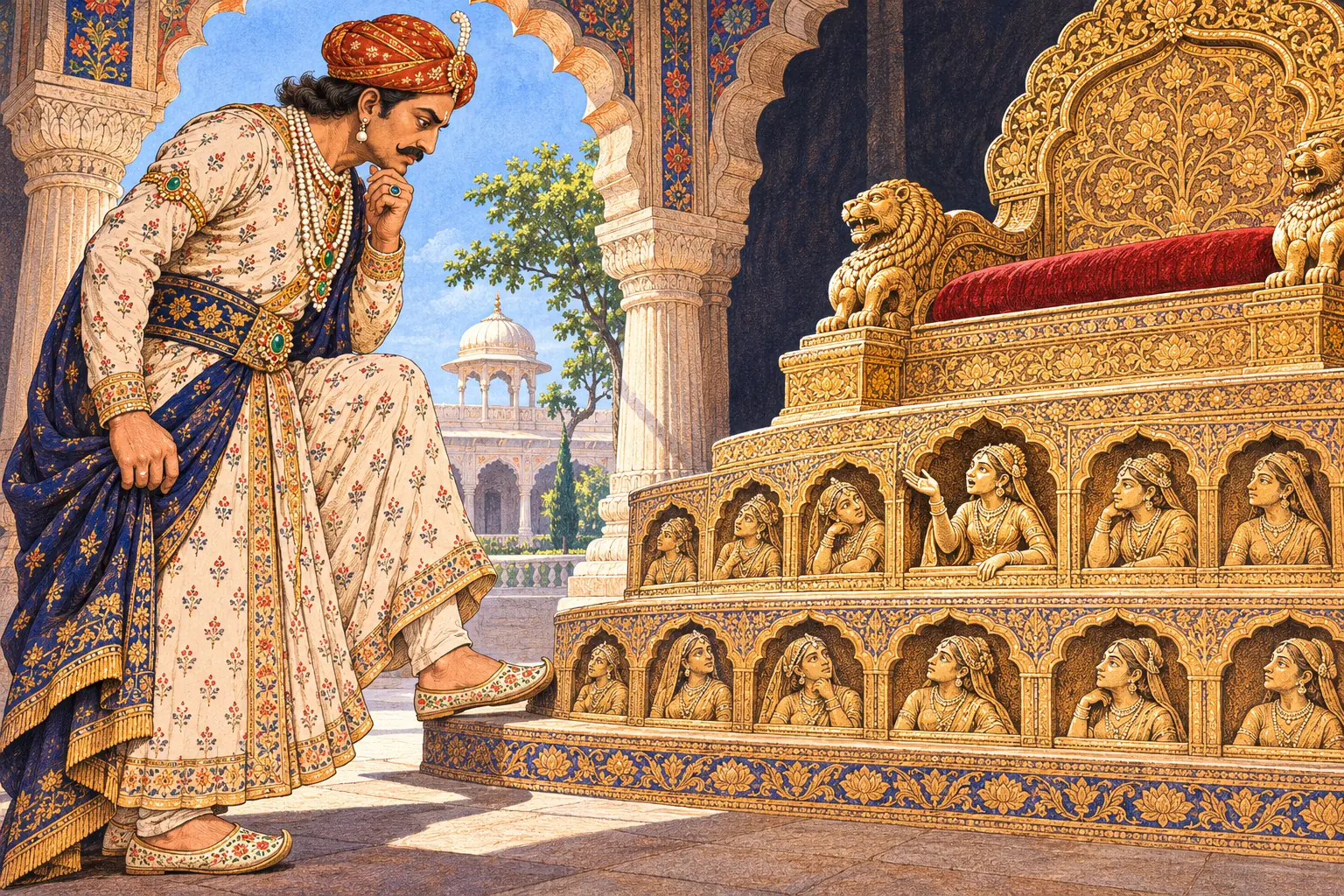 The speaking throne
Singhasan Battisi
Bhoj reaches for a throne. A figure carved into it asks what he has done to deserve the seat.
Enter the story →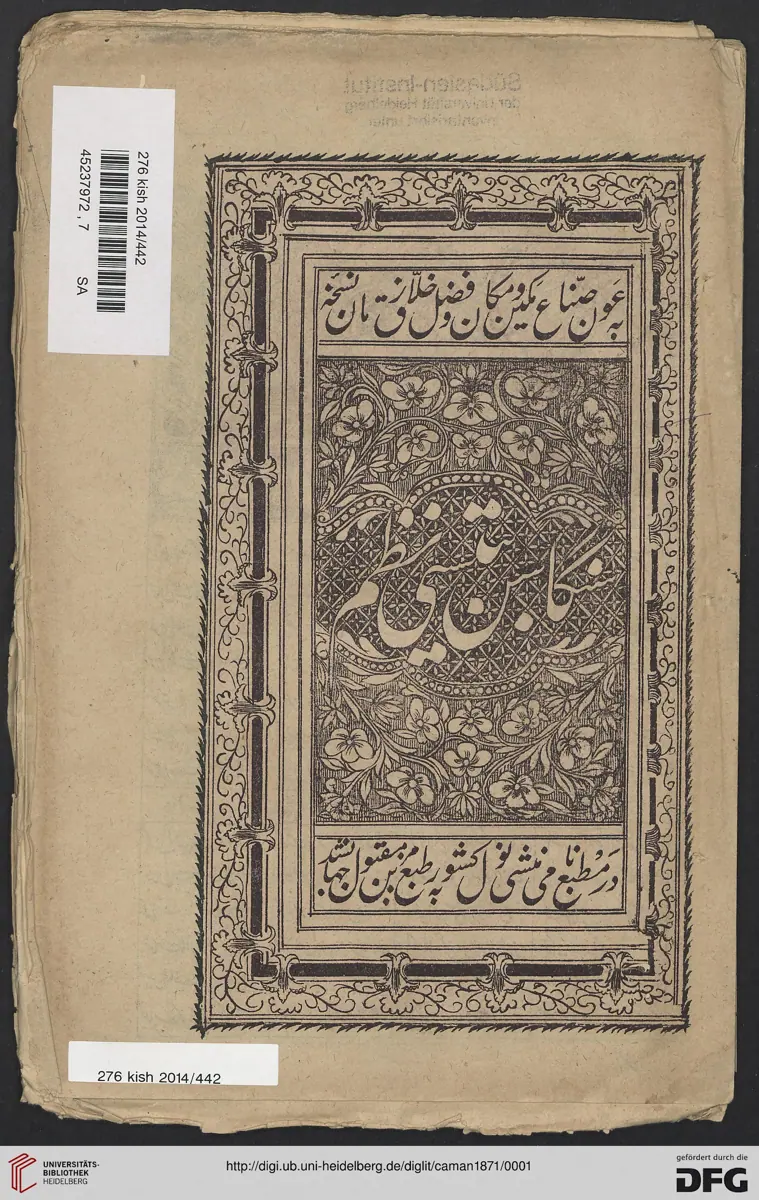 Rang Lal Chaman’s Urdu title leafKanpur · 1871
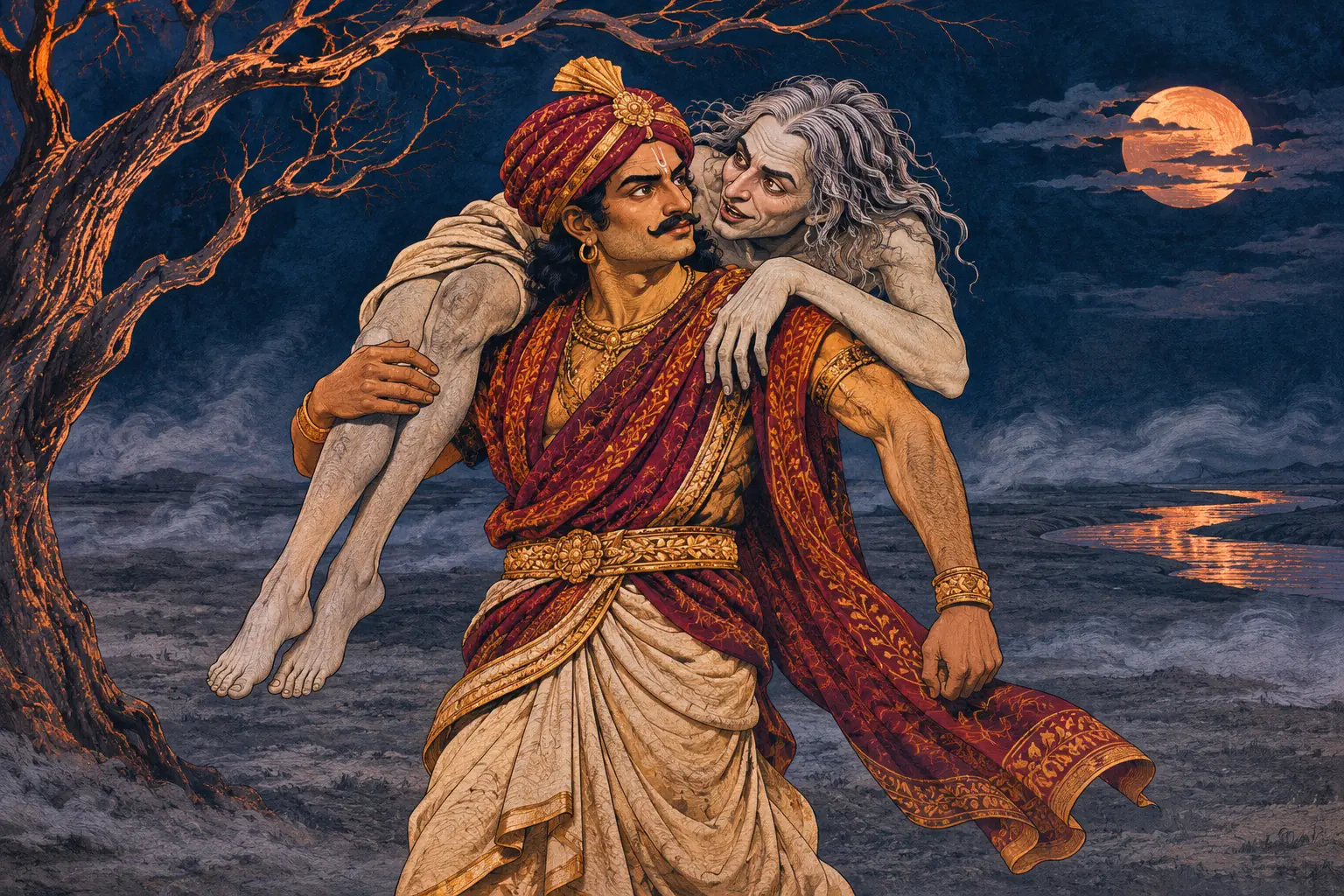 The spirit’s question
Vikram and Vaitaal
Vikram carries a corpse through the dark. The spirit inside has a question, and answering will cost him another journey.
Enter the story →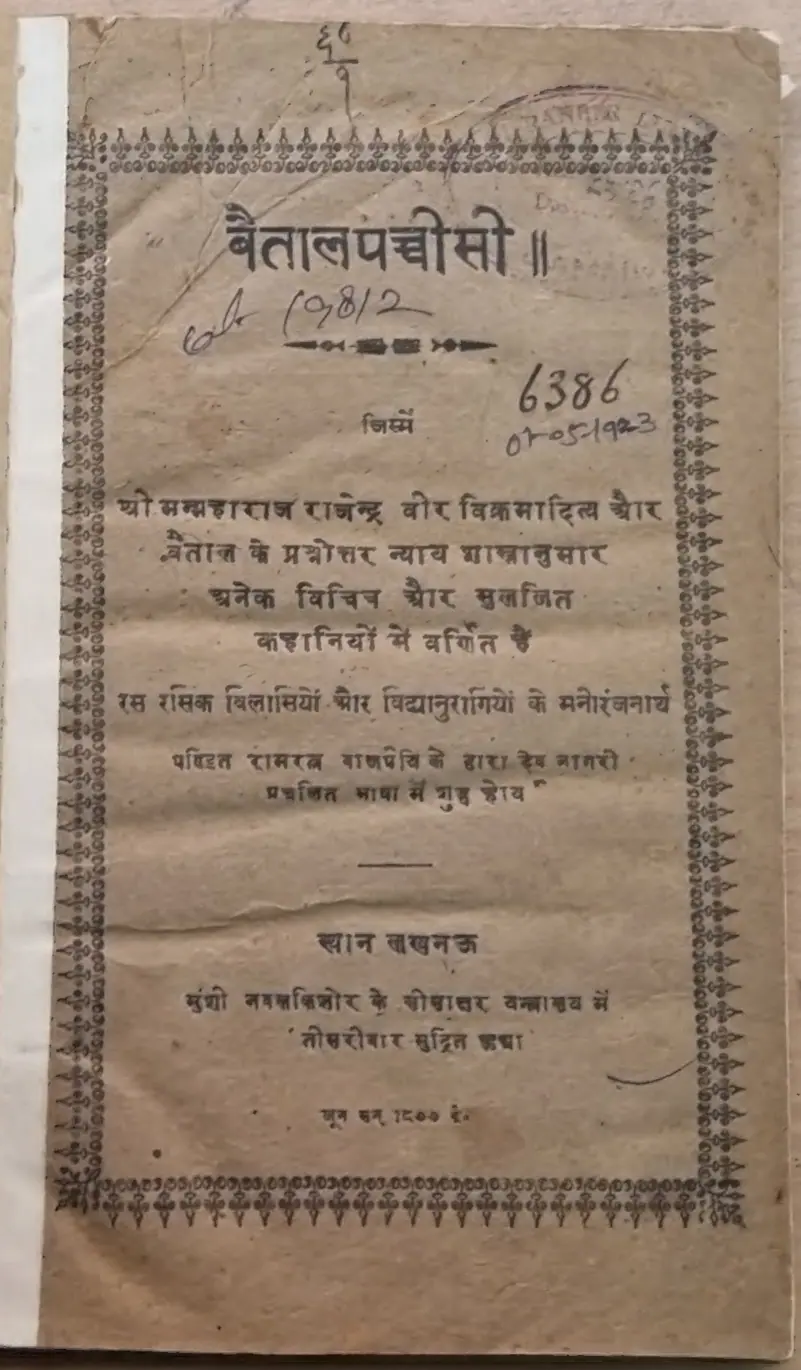 Vajapeyi’s Devanagari title leafLucknow · catalogued 1877
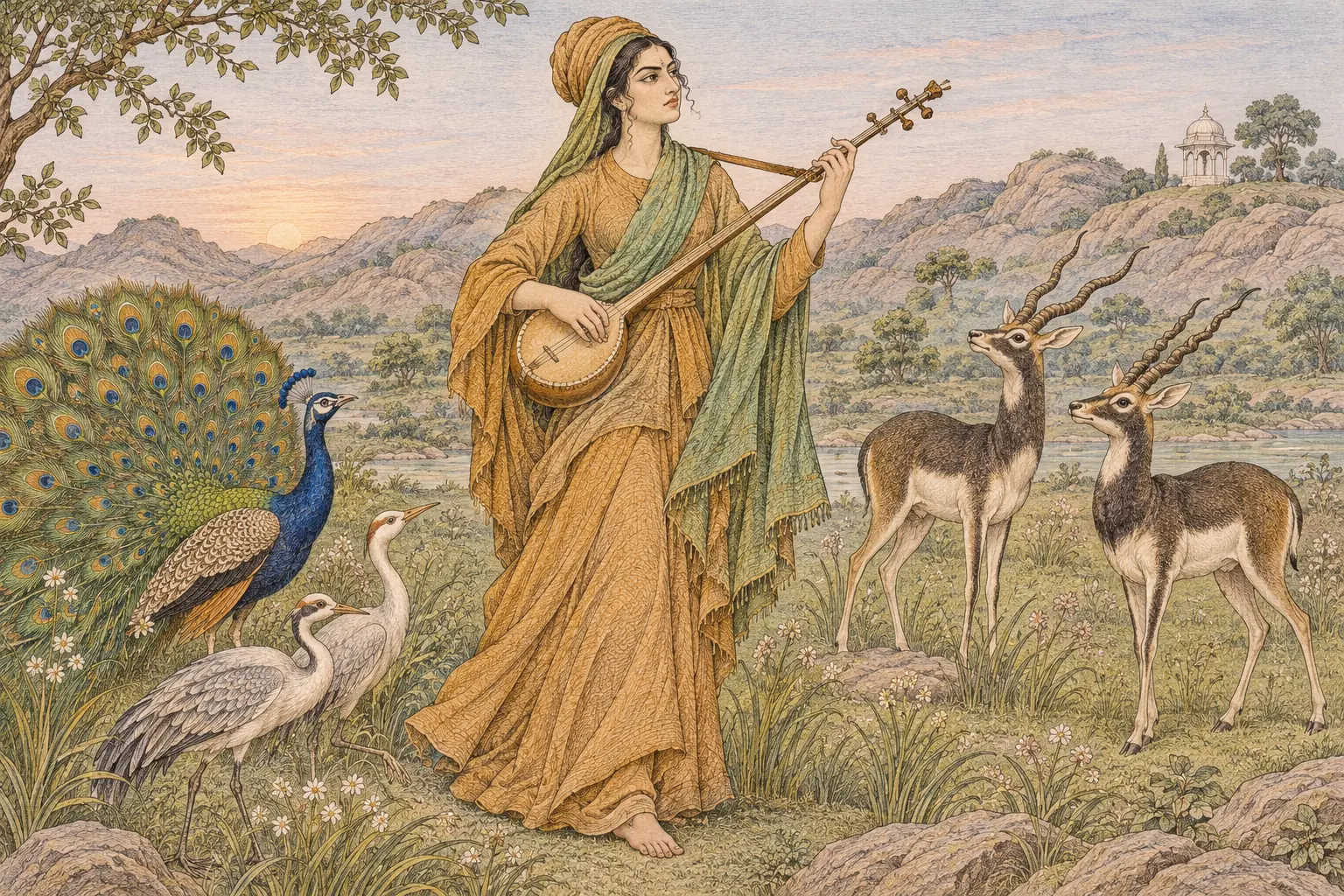 The fairy in exile
Indar Sabha
An earthly prince enters a forbidden assembly. A fairy must win back the king’s ear to set him free.
Enter the story →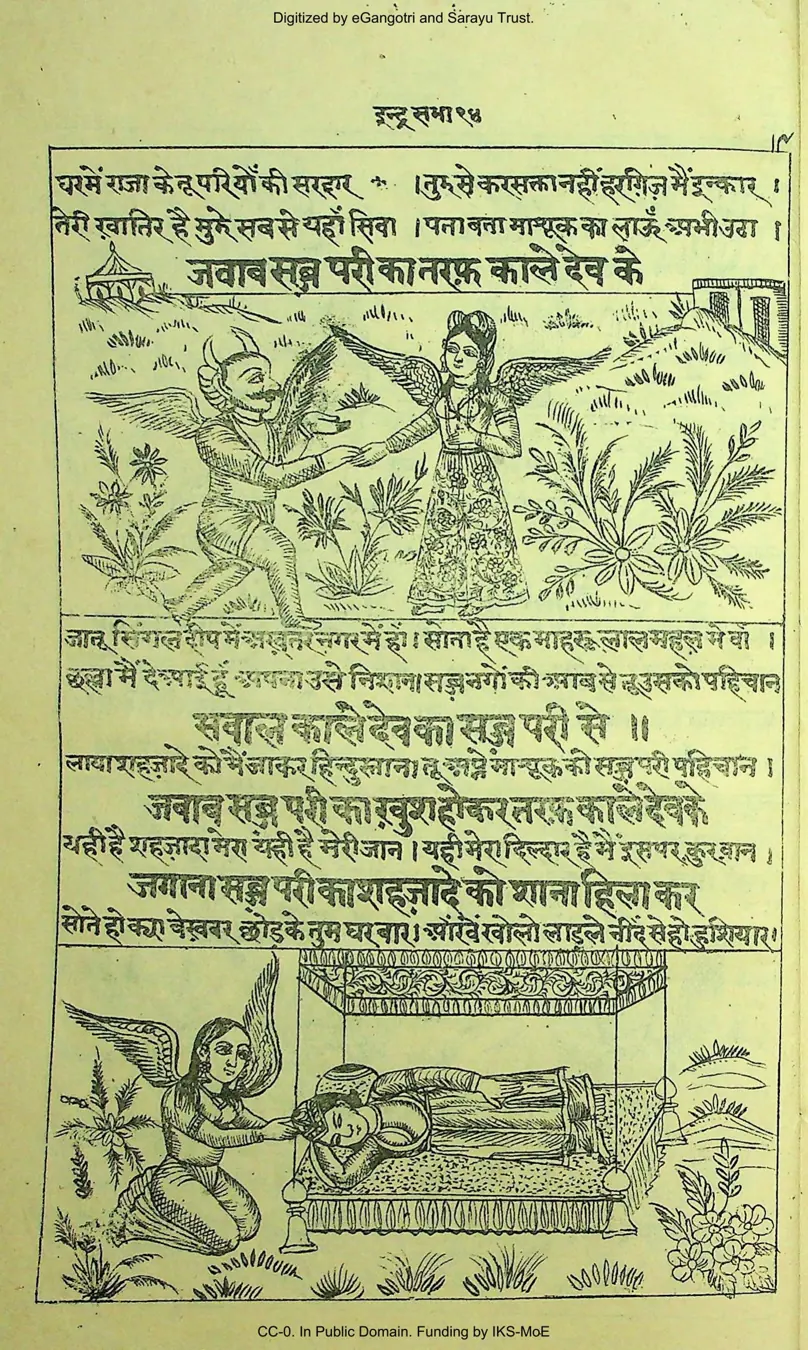 Sabz Pari and the sleeping princeIllustrated opening · p. 14
The three painted doorways are modern museum interpretations. The smaller images show pages from the printed editions.
What the bookseller put on the last opening
On the left, Vikram reaches the end of his encounters with Vaitaal. On the right, the printer offers the reader another book. Find Indra Sabha and Singhasan Battisi in the right-hand column, then follow the links to their stories.
Who is listening?
In the throne stories, Bhoj listens to figures who remember Vikram. In the riddles, Vikram listens to the spirit on his shoulder. Indar Sabha takes us to a different court altogether, where a fairy must persuade King Indar to hear her sing.
Behind the stories
These are selected English retellings of the Urdu verse, Hindi riddles and musical drama. Each scene leads back to its printed source. The research dossier brings together the edition history, photographs and a 38-entry source register. The opening stock list is from the Internet Archive Baital facsimile, uploaded by “indic literature..” and marked CC0.