Meet the founder, discover the dates behind the stories, and enjoy three complete short reads, historical reports and a comic.
THE MONTHLY JOURNAL OF LE PRESSले प्रेस की मासिक पत्रिका
AWADH AKBAR / अवध अख़बार
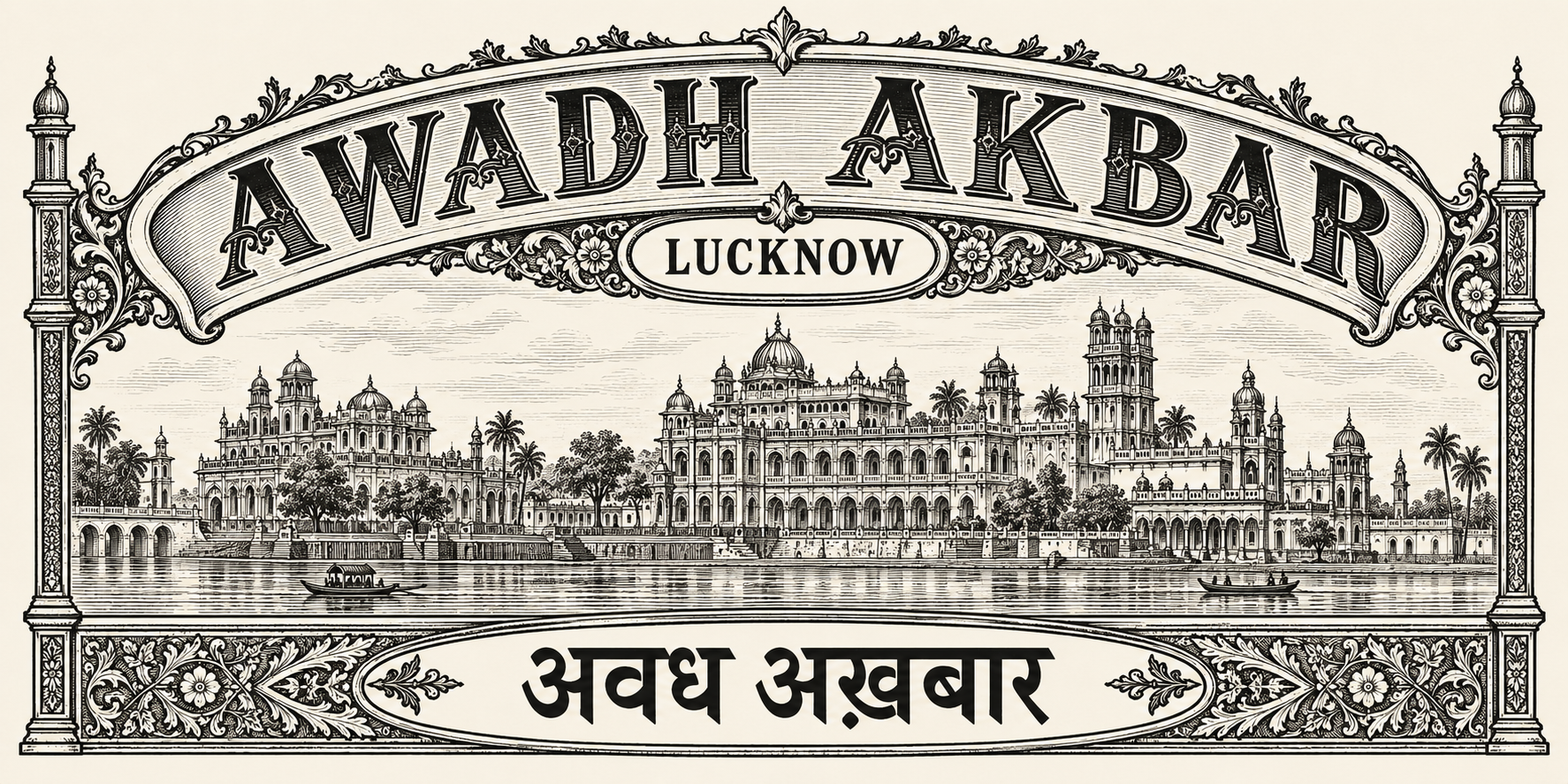
A NEW ILLUSTRATED HOMAGE TO THE 1875 MASTHEAD · १८७५ के मुखशीर्ष से प्रेरित नया चित्रांकन
VOL. 01 / ISSUE 01October, 2026.
अक्टूबर २०२६READING EDITION · पठन अंक
अक्टूबर २०२६READING EDITION · पठन अंक
IN THIS ISSUE · इस अंक में
02–03Munshi Newal Kishore: a life in printमुंशी नवल किशोर जी · जीवन, उपलब्धियाँ और समय-संदर्भ
05–06A thief, a potter & a very brave Khojiखटमल, चोर और बहादुर खोजी · पूरी घटना का रूपांतरण
07The gold that cost too muchसोने का महँगा चमत्कार · सरशार की दूसरी कहानी
08Premchand: The Servant of the Nationप्रेमचंद: राष्ट्र का सेवक · संपूर्ण लघुकथा
09–10What the old newspaper reportedदीवाली का मेला, एक अफ़वाह और पाठकों की शिकायतें
11Khoji’s Conditions · The monthly comicखोजी की शर्तें · मासिक चित्रकथा
संस्थापक का जीवन, रचनाओं का समय-संदर्भ, तीन पूरी लघु रचनाएँ, ऐतिहासिक ख़बरें और एक चित्रकथा: इत्मीनान से पढ़िए।
AWADH AKBAR / अवध अख़बारTHE FOUNDER · संस्थापक
A LIFE IN PRINT · मुद्रण और ज्ञान को समर्पित जीवन
Munshi Newal Kishore
मुंशी नवल किशोर जी
1836–1895The publisher who opened a world of reading.
एक प्रकाशक, जिन्होंने पाठकों के लिए संसार खोला।
एक प्रकाशक, जिन्होंने पाठकों के लिए संसार खोला।
In 1858, twenty-two-year-old Munshi Newal Kishore founded his Press in Lucknow. As the city recovered from the upheaval of 1857, his enterprise would help carry its literary inheritance to new readers.
Learning the craft
Born in 1836, he studied at Agra College, then learned printing, publishing and newspaper editing at Harsukh Rai’s Koh-e-Nur Press in Lahore. These practical skills laid the foundation for his work in Lucknow.[A]
A library across languages
The Press published approximately 5,000 titles during his lifetime, across Hindi, Urdu, Persian, Arabic, Sanskrit and English. Schoolbooks, poetry, religious learning, medicine and translations shared its catalogue. Sanskrit classics and works on Islam belonged to the same publishing world.[B]
Scholars, editors and translators made the Press an intellectual meeting place. Cultural patronage rested on commercial judgement: government printing and educational publishing also supported the enterprise.[C]
A public that read together
His Awadh Akhbar brought news and literature together. Sarshar’s Fasana-e-Azad appeared there in 1878–1880.[1] The Press also issued Ghalib’s collected writing. A publisher could preserve a poet’s voice while welcoming new storytelling.
Newal Kishore also supported education.[A] He died in 1895; the institution continued. Premchand’s later association through Madhuri belongs to this legacy, after the founder’s lifetime.
For Le Press today, his life offers an invitation: preserve enduring work, welcome different voices, and make culture a shared community experience.
१८५८ में बाईस वर्ष के मुंशी नवल किशोर जी ने लखनऊ में अपने प्रेस की नींव रखी। १८५७ की उथल-पुथल से उबरते शहर में उनका उद्यम साहित्यिक विरासत को नए पाठकों तक पहुँचाने का माध्यम बना।
सीखने से सृजन तक
१८३६ में जन्मे नवल किशोर जी ने आगरा कॉलेज में अध्ययन किया। लाहौर में हरसुख राय के कोह-ए-नूर प्रेस में उन्होंने मुद्रण, प्रकाशन और अख़बार का संपादन सीखा। इसी व्यावहारिक अनुभव से लखनऊ में उनके काम की नींव पड़ी।[A]
कई भाषाओं का पुस्तक-संसार
उनके जीवनकाल में प्रेस ने हिंदी, उर्दू, फ़ारसी, अरबी, संस्कृत और अंग्रेज़ी में लगभग ५,००० शीर्षक प्रकाशित किए। पाठ्यपुस्तकें, कविता, धर्म, चिकित्सा और अनुवाद साथ आए। संस्कृत के शास्त्रीय ग्रंथ और इस्लामी विद्या की पुस्तकें एक ही प्रकाशन-संसार का हिस्सा थीं।[B]
विद्वानों, संपादकों और अनुवादकों ने प्रेस को विचारों के मिलन-स्थल में बदला। सांस्कृतिक संरक्षण के साथ व्यावसायिक सूझ-बूझ भी थी: सरकारी छपाई और शैक्षिक प्रकाशन ने उद्यम को सहारा दिया।[C]
पढ़ने वाला साझा समाज
उनके अवध अख़बार ने समाचार और साहित्य को एक मंच दिया। सरशार का फ़साना-ए-आज़ाद यहाँ १८७८–१८८० में धारावाहिक रूप में छपा।[1] प्रेस ने ग़ालिब की संकलित रचनाएँ भी प्रकाशित कीं। एक प्रकाशक पुराने स्वर सँजोते हुए नई कथाओं के लिए जगह बना सकता था।
नवल किशोर जी ने शिक्षा को भी सहयोग दिया।[A] १८९५ में उनका निधन हुआ; संस्था आगे बढ़ती रही। माधुरी के माध्यम से प्रेमचंद का बाद का जुड़ाव इसी विरासत का हिस्सा है, संस्थापक के जीवनकाल का नहीं।
आज ले प्रेस के लिए उनका जीवन एक आमंत्रण है: मूल्यवान रचनाएँ सँजोएँ, अलग-अलग आवाज़ों का स्वागत करें और संस्कृति को समुदाय का साझा अनुभव बनाएँ।
PROFILE SOURCES · जीवन-परिचय के स्रोत
[A] The Lucknow Observer (2014). [B] FID4SA / Heidelberg bibliography. [C] Stark, An Empire of Books: publisher’s overview. Catalogue sources: p. 4. Closing paragraph: editorial reflection.
AWADH AKBAR / अवध अख़बारTHE FOUNDER · संस्थापक
LIFE, LITERATURE & LEGACY · जीवन, साहित्य और विरासत
Placing the pages in time.
इन पन्नों का समय-संदर्भ।
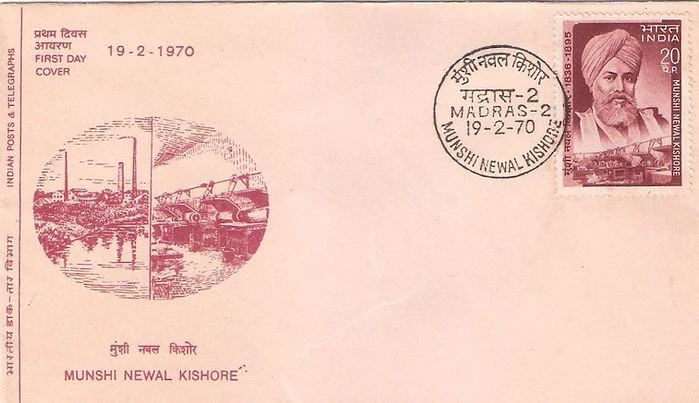
१९७० का स्मारक प्रथम-दिवस आवरण; ले प्रेस के उपलब्ध चित्र-संग्रह से।
- 1836Munshi Newal Kishore is born.
मुंशी नवल किशोर जी का जन्म। - 1858Founds the Press in Lucknow, aged 22.
२२ वर्ष की उम्र में लखनऊ में प्रेस की स्थापना। - 1895His life ends; the institution continues.
निधन; संस्था की यात्रा जारी रहती है। - 1970India honours him with a postage stamp.
भारत का स्मारक डाक टिकट।
The stories in this issue · इस अंक की रचनाएँ
c. 1870sलगभग १८७० का दशक
Khoji stories & comic
Approximate fictional setting: late nineteenth century; these incidents have no stated year. Original work: Sarshar’s Fasana-e-Azad, serialised in Awadh Akhbar, 1878–1880; Newal Kishore Press, Lucknow. Text used: Premchand’s Hindi Azad-Katha, I, §31. [1, 4]
खोजी की कहानियाँ और चित्रकथा
काल्पनिक घटनाओं का अनुमानित परिवेश उन्नीसवीं सदी का उत्तरार्ध है; सटीक वर्ष नहीं दिया गया। मूल: सरशार का फ़साना-ए-आज़ाद; अवध अख़बार, १८७८–१८८०; नवल किशोर प्रेस, लखनऊ। आधार-पाठ: प्रेमचंद का हिंदी आज़ाद-कथा, भाग १, खंड ३१।
1856 / 1924१८५६ / १९२४
Shatranj ke Khiladi
Fictional setting: Awadh before its annexation in 1856. Hindi publication: Madhuri, 1924, a Newal Kishore Press journal. Only the opening is excerpted here. [5–7]
शतरंज के खिलाड़ी
कथा का परिवेश: १८५६ में अवध के विलय से ठीक पहले। हिंदी प्रकाशन: माधुरी, १९२४; नवल किशोर प्रेस की पत्रिका। इस अंक में केवल आरंभिक उद्धरण है।
1930१९३०
Rashtra ka Sevak
Publication year recorded in Bahuvachan 42, p. 18. Setting: early twentieth-century social reform; no exact event date. Hindi text: Hindi Samay. Its first publication venue has not been verified as Newal Kishore Press. [D]
राष्ट्र का सेवक
बहुवचन ४२, पृ. १८ में प्रकाशन-वर्ष १९३० दर्ज है। परिवेश: बीसवीं सदी के आरंभ का समाज-सुधार; घटना की तिथि अनिर्दिष्ट। हिंदी पाठ: हिंदी समय। नवल किशोर प्रेस से इसके प्रथम प्रकाशन की पुष्टि नहीं हुई है।
Newspaper dates / अख़बार की तारीख़ें: 1871, 1874, 1875 and 1877 identify the cited issues, not necessarily the reported event dates. ये तिथियाँ संबंधित अंकों की हैं; घटनाओं की तिथियाँ अलग हो सकती हैं।
[D] Bahuvachan 42 (2014), p. 18, Mahatma Gandhi Antarrashtriya Hindi Vishwavidyalaya. The 1878–1880 serial dates follow Stark, p. 89. Approximate story eras are editorial context, not dates printed in the episodes.
PUBLISHING HERITAGE · NEWAL KISHORE PRESS
© 2026 Newal Kishore Press, for protectable editorial compilation and design in this Le Press edition. Public-domain original texts and separately credited third-party material are excluded from this notice.
© २०२६ नवल किशोर प्रेस: ले प्रेस के इस अंक के संरक्षण-योग्य संपादकीय संकलन और डिज़ाइन के लिए। सार्वजनिक डोमेन के मूल पाठ और अलग से श्रेय दिए गए अन्य स्रोतों की सामग्री इस दावे में शामिल नहीं हैं।
AWADH AKBAR / अवध अख़बारTHE READING ROOM · वाचन कक्ष
FROM THE PRESS’S SHELVES · प्रेस की किताबों से
Words that keep a city alive.
शब्दों में बसता हुआ शहर।
1858THE PRESS BEGINS
प्रेस की स्थापना
प्रेस की स्थापना
≈5,000TITLES IN THE FOUNDER’S LIFETIME
संस्थापक के जीवनकाल में पुस्तकें
संस्थापक के जीवनकाल में पुस्तकें
5LANGUAGES HIGHLIGHTED IN THE ARCHIVE
संग्रह में प्रमुख भाषाएँ
संग्रह में प्रमुख भाषाएँ
Heidelberg University Library records the Press’s range across Hindi, Urdu, Persian, Arabic and Sanskrit: literature alongside education, religion and medicine. Its digital collection lets a new generation begin exploring that world.[2]
हाइडेलबर्ग विश्वविद्यालय पुस्तकालय का विवरण हिंदी, उर्दू, फ़ारसी, अरबी और संस्कृत में प्रेस की व्यापकता दिखाता है: साहित्य के साथ शिक्षा, धर्म और चिकित्सा। उसका डिजिटल संग्रह नई पीढ़ी को इस संसार तक पहुँचाता है।[2]
A LINE TO CARRY FORWARD · आज के लिए एक पंक्ति
“अखबार ... सौदागरों का दोस्त, कारीगरों का हमदर्द, रिआया का वकील, सब कुछ है।”“A newspaper ... a merchant’s friend, an artisan’s ally, an advocate for the people: it is all of these.”
Ratan Nath Sarshar, Azad-Katha, Part I, section 14; Hindi translation by Premchand. Abridged excerpt; fresh English rendering for this issue. [3]
रतननाथ सरशार; प्रेमचंद का हिंदी अनुवाद। संक्षिप्त उद्धरण; अंग्रेज़ी भावानुवाद इस अंक के लिए।
Ghalib in the catalogue
Rekhta preserves Kulliyat-e-Ghalib bearing the Munshi Nawal Kishor, Lucknow imprint. Begin with the book itself: a title page can tell a story about how a poet’s work found its readers.
Explore the digitised volume ↗किताबों की सूची में ग़ालिब
रेख़्ता पर उपलब्ध कुल्लियात-ए-ग़ालिब में मुंशी नवल किशोर, लखनऊ का प्रकाशकीय संबंध दर्ज है। शुरुआत किताब से कीजिए: उसका शीर्षक-पृष्ठ भी बताता है कि शायर की रचनाएँ पाठकों तक कैसे पहुँचीं।
डिजिटल प्रति देखिए ↗Beyond the chessboard
Premchand’s Shatranj ke Khiladi appeared in Madhuri in 1924. The journal was published by Naval Kishor Press. Two men’s absorption in a game becomes a sharp question about responsibility as their world changes.[5–6]
“वाजिदअलीशाह का समय था। लखनऊ विलासिता के रंग में डूबा हुआ था।”
Opening excerpt. “It was the time of Wajid Ali Shah. Lucknow was immersed in luxury.” Fresh English rendering.[7]
बिसात के बाहर की दुनिया
प्रेमचंद की शतरंज के खिलाड़ी १९२४ में माधुरी में प्रकाशित हुई। यह पत्रिका नवल किशोर प्रेस से निकलती थी। खेल में डूबे दो लोगों के बहाने कहानी बदलती दुनिया के प्रति ज़िम्मेदारी का तीखा सवाल उठाती है।[5–6]
इस महीने का पाठकीय सवाल
किस मोड़ पर शौक़, दुनिया से आँख चुराना बन जाता है?
AWADH AKBAR / अवध अख़बारOCTOBER 2026 · READING EDITION
STORY 01 · कहानी ०१
The thief who wasn’t there.
चोर जो था ही नहीं।
Fictional setting: c. 1870s · Original serial: 1878–1880 · Publication notes, p. 3
अनुमानित कथा-परिवेश: १८७० का दशक · मूल धारावाहिक: १८७८–१८८०
A complete incident retold in two pages from Azad-Katha, Part I, section 31. New English and simplified Hindi; dialogue is adapted.
आज़ाद-कथा, भाग एक, खंड ३१ की एक पूरी घटना का दो पन्नों में पुनर्कथन। नई अंग्रेज़ी और सरल हिंदी; संवाद रूपांतरित हैं।
The trouble began with bedbugs. Towards the end of the night, Khoji could bear them no longer. He shouted for his dagger, determined to take revenge on the little creatures that had been feasting on him.
The other travellers in the sarai woke with a start. A furious voice in the dark could mean only one thing: a thief! Someone cried out. Someone else took up the cry. Within moments the lodging house was in uproar.
One traveller felt around for his belongings. Another stared anxiously at his bundle. A third was so frightened that he kept his eyes tightly shut. Nobody had seen a thief, but everybody had heard about one.
Khoji heard the alarm too. Forgetting that his own shout had started it, he demanded his dagger again and rushed to help. In his muddled state he imagined the thief running just ahead of him.
Then his foot caught. Down he went, straight into a potter’s stack of earthen vessels. Pots shattered beneath him. The potter, awakened by the crash, seized Khoji before he could get up. Here, at last, was someone to point to.
“The thief! I’ve caught the thief!”
Travellers and innkeepers came running with sticks. In the darkness they could not distinguish a criminal from an unfortunate guest. Khoji received a beating that drove every thought of his dagger clean out of his head.
रात का पिछला पहर था और मियाँ खोजी की जान खटमलों ने आफ़त में डाल रखी थी। आख़िर उनका धीरज टूट गया। उन्होंने चिल्लाकर अपनी करौली माँगी। इन छोटे-छोटे ख़ून पीने वालों से वह अभी बदला लेना चाहते थे।
सराय के दूसरे मुसाफ़िर इस आवाज़ से हड़बड़ाकर जागे। अँधेरे में ऐसी चीख़-पुकार का क्या मतलब हो सकता था? ज़रूर कोई चोर घुस आया है! किसी ने शोर मचाया, दूसरे ने वही पुकार दोहरा दी। देखते ही देखते पूरी सराय में हड़कंप मच गया।
कोई अपनी चीज़ें टटोलने लगा। कोई गठरी को आँखें फाड़कर देखने लगा। एक मुसाफ़िर डर के मारे आँखें बंद किए पड़ा रहा। चोर किसी ने देखा नहीं था, लेकिन उसकी ख़बर सबके पास थी।
खोजी ने भी चोर-चोर की आवाज़ सुनी। यह भूलकर कि सारा हंगामा उन्हीं की पुकार से शुरू हुआ है, उन्होंने फिर करौली माँगी और मदद के लिए दौड़ पड़े। पिनक में उन्हें ऐसा लगा कि चोर उनके आगे-आगे भाग रहा है।
तभी पाँव अटका और धड़ाम! खोजी सीधे उन हंडों पर जा गिरे जो एक कुम्हार ने रख छोड़े थे। कई हंडे टूटकर बिखर गए। आवाज़ सुनकर कुम्हार उठ बैठा और खोजी के सँभलने से पहले ही उन्हें दबोच लिया। अब भीड़ को दिखाने के लिए एक आदमी मिल गया था।
“दौड़ो! चोर पकड़ लिया!”
मुसाफ़िर और सराय वाले डंडे लेकर दौड़े आए। अँधेरे में किसे मालूम होता कि पकड़ा गया आदमी चोर है या बदक़िस्मत मेहमान? खोजी की ऐसी पिटाई हुई कि करौली का ख़याल भी जाता रहा।
The lamp is lit on the next page → अगले पन्ने पर चिराग़ जलेगा →
AWADH AKBAR / अवध अख़बारOCTOBER 2026 · READING EDITION
STORY 01 · THE ENDING · कहानी का अंत
Fifty men. Exactly fifty.
पचास आदमी। पूरे पचास।
At last a traveller hesitated. “Doesn’t that look like Khoji?” A lamp was lit. It was indeed Khoji, thoroughly subdued.
Meanwhile, the story had reached Azad in two different versions. One person said Khoji had stolen a traveller’s cap. Another was certain that he had been caught stealing the potter’s vessels.
Azad could not make sense of either report. Khoji, a thief? And even if he were to steal something, why on earth would he choose cooking pots? Azad got off his bed to go and rescue his companion.
Before he could leave, Khoji appeared, staggering and muttering. His first complaint was against Azad: a fine friend, sleeping comfortably while all this was happening!
“You can scold me later,” Azad said. “First tell me whether your arms and legs are all right.”
“My arms and legs? You should have seen what I did! Fifty men surrounded me. Exactly fifty, not one more or less. I threw one down, tossed another over my hip. Some fell simply from fear of me. Whoever came forward, I defeated.”
“Really?”
“Show me another man in the world with such courage!”
Azad had his answer ready. Only God could speak for the whole world, he said, but he himself could certainly testify that no one was as shameless as Khoji.
And with that, the two men went to sleep. The thief who had never existed had caused enough trouble for one night.
आख़िर एक मुसाफ़िर ठिठका। “अरे, यह तो खोजी मालूम होते हैं!” चिराग़ जलाया गया। सामने सचमुच खोजी थे, इस बार बिल्कुल दबे-दबे से।
उधर आज़ाद तक ख़बर दो रूपों में पहुँच चुकी थी। किसी ने कहा, खोजी ने एक मुसाफ़िर की टोपी चुराई थी। दूसरे ने बताया, नहीं, वह कुम्हार की हाँडियाँ चुराते पकड़े गए हैं।
आज़ाद को दोनों में से कोई बात नहीं जँची। खोजी और चोरी? और चोरी करते भी तो हाँडियों की क्यों? वह अपने साथी को बचाने के लिए चारपाई से उतर ही रहे थे कि खोजी झूमते हुए सामने आ गए।
उनकी पहली शिकायत आज़ाद से थी। वाह, क्या दोस्त हैं! ख़ुद तो आराम से खर्राटे भरते रहे और साथी की ख़बर तक न ली।
आज़ाद ने कहा, “हमें भला-बुरा बाद में कह लेना। पहले यह बताओ, हाथ-पाँव तो नहीं टूटे?”
“हाथ-पाँव! आप वहाँ होते तो देखते कि मैंने कैसे जौहर दिखाए। पचास आदमी घेरे हुए थे। पूरे पचास, न एक कम, न एक ज़्यादा। किसी को पटक दिया, किसी को कमर पर लादकर फेंका। कुछ तो मेरे रोब से ही काँपकर गिर पड़े। जो सामने आया, उसे नीचा दिखाया।”
“सच?”
“सारी दुनिया में ऐसा हिम्मतवाला कोई और दिखा दीजिए!”
आज़ाद के पास इसका भी जवाब था। सारी दुनिया का हाल तो ख़ुदा जाने, उन्होंने कहा, लेकिन इतनी गवाही वह ख़ुद दे सकते हैं कि खोजी जैसा बेशर्म आदमी कहीं न होगा।
इसके बाद दोनों सो गए। जो चोर था ही नहीं, उसने एक रात के लिए काफ़ी आफ़त खड़ी कर दी थी।
Source: Sarshar, Azad-Katha, Premchand’s Hindi translation, Part I, §31, opening sarai incident. The episode ends here; it is not an unfinished instalment. [4]
AWADH AKBAR / अवध अख़बारOCTOBER 2026 · READING EDITION
STORY 02 · कहानी ०२
The gold that cost too much.
सोने का महँगा चमत्कार।
Sarshar · Fictional setting: c. 1870s · Awadh Akhbar, 1878–1880
सरशार · अनुमानित परिवेश: १८७० का दशक · प्रकाशन-संदर्भ: पृ. ३
At the railway station, Azad and Khoji found a crowd around a man in ochre robes. He looked like a holy man. Azad asked a policeman who he was.
The policeman told a different story. The stranger had gathered followers who spread tales of his miraculous powers. The more people repeated them, the larger his following grew.
Then came the performance that made his reputation. Visiting a moneylender’s house, he told the son to fetch a new earthen pot, water and an iron plate. The pot was heated over a fire of dung cakes. The visitor muttered over the water and supplied a powder to be added to it.
When the young man went indoors, the supposed miracle-worker quietly removed the iron and substituted a gold plate he had brought with him. Then he left.
The son returned to find gold where iron had been. Soon the whole neighbourhood was talking. People went looking for the extraordinary visitor. Here, they believed, was someone who could turn ordinary metal into wealth.
Their excitement finally persuaded a wealthy woman to entrust him with jewellery worth five or six thousand rupees. This time he disappeared with the valuables. There was no miracle, only an exchange that had made a much larger theft possible.
For a year he could not be found, the policeman said. Now he had been caught. The man whose followers had claimed such powers was in custody.
The train arrived. Azad and Khoji climbed aboard, leaving the miracle-worker behind.
रेलवे स्टेशन पर आज़ाद और खोजी को एक भीड़ दिखाई दी। बीच में गेरुए कपड़े पहने एक आदमी खड़ा था। देखने में फ़क़ीर लगता था। आज़ाद ने एक सिपाही से पूछा कि यह कौन है।
सिपाही ने उसकी दूसरी ही कहानी सुनाई। उस आदमी ने चेले बना लिए थे और उसके चमत्कारों के क़िस्से फैलने लगे थे। जितनी बार लोग ये बातें दोहराते, उतने ही नए लोग उसके पास पहुँच जाते।
फिर उसने एक ऐसा तमाशा किया जिससे उसकी धाक जम गई। एक महाजन के घर जाकर उसने महाजन के बेटे से नई हाँडी, पानी और लोहे का पत्तर मँगवाया। कंडों की आग पर हाँडी चढ़ाई गई। वह पानी पर कुछ पढ़ने लगा और उसमें डालने के लिए एक पुड़िया दी।
लड़का थोड़ी देर के लिए घर के अंदर गया। इतने में चमत्कार दिखाने वाले ने लोहे का पत्तर निकाल लिया और उसकी जगह अपने पास से सोने का पत्तर रख दिया। फिर वहाँ से चलता बना।
लड़का लौटा तो लोहे की जगह सोना था। मोहल्ले में शोर मच गया। लोग उस अद्भुत आदमी को ढूँढ़ने लगे। उन्हें विश्वास हो गया कि वह साधारण धातु को सोने में बदल सकता है।
इसी चर्चा के चक्कर में एक मालदार औरत ने पाँच-छह हज़ार रुपये के गहने उसे सौंप दिए। इस बार वह गहने लेकर ग़ायब हो गया। असल में कोई चमत्कार नहीं हुआ था। पहले एक चीज़ की जगह दूसरी रखकर भरोसा जीता गया था; उसी भरोसे ने बड़ी चोरी का रास्ता बनाया।
सिपाही ने बताया कि एक साल तक उसका पता नहीं चला। अब जाकर वह पकड़ा गया है। जिसके चेलों ने इतनी शक्तियों का दावा किया था, वह अब हिरासत में था।
इतने में गाड़ी आ गई। आज़ाद और खोजी उसमें बैठ गए। चमत्कारी बाबा स्टेशन पर ही रह गए।
A selected, self-contained gold-making episode from the policeman’s account in Azad-Katha, Part I, §31, station scene. Other incidents are omitted. This is literary fiction, not a verified nineteenth-century crime report. New wording in both languages. [4]
यह सिपाही द्वारा सुनाए गए सोना बनाने के प्रसंग का पूरा लघु रूपांतरण है। अन्य प्रसंग छोड़ दिए गए हैं। यह साहित्यिक कथा है, ऐतिहासिक अपराध की सत्यापित ख़बर नहीं।
AWADH AKBAR / अवध अख़बारOCTOBER 2026 · READING EDITION
STORY 03 · PREMCHAND · प्रेमचंद की संपूर्ण लघुकथा
The Servant of the Nation
राष्ट्र का सेवक
Published 1930 · Complete Hindi text + new English translation · Source, p. 3
प्रकाशन: १९३० · संपूर्ण हिंदी पाठ और नया अंग्रेज़ी अनुवाद · स्रोत: पृ. ३
The servant of the nation declared: “There is only one way to free our country: treat those considered lowly as brothers and those cast down as equals. Everyone in this world is a brother. No one is low, no one high.”
The world applauded. What a broad vision! What a tender heart!
His beautiful daughter Indira heard him and sank into thought.
The servant of the nation embraced a young man from a caste regarded as low.
The world said: “He is an angel, a prophet, the helmsman of the nation’s boat.”
Indira watched, and her face brightened.
The servant of the nation took the young man into a temple, showed him the deity and said: “Our god is in poverty, in humiliation, among those brought low.”
The world said: “What a pure conscience! What wisdom!”
Indira watched and smiled.
She went to the servant of the nation and said: “Respected Father, I want to marry Mohan.”
He looked at her lovingly and asked: “Who is Mohan?”
With enthusiasm, Indira replied: “Mohan is the young man you embraced, the one you took into the temple. He is truthful, brave and good.”
The servant of the nation looked at her with fury in his eyes and turned his face away.
राष्ट्र के सेवक ने कहा - देश की मुक्ति का एक ही उपाय है और वह है नीचों के साथ भाईचारे का सलूक, पतितों के साथ बराबरी का बर्ताव। दुनिया में सभी भाई हैं, कोई नीच नहीं, कोई ऊँच नहीं।
दुनिया ने जय-जयकार की - कितनी विशाल दृष्टि है, कितना भावुक हृदय!
उसकी सुंदर लड़की इंदिरा ने सुना और चिंता के सागर में डूब गई।
राष्ट्र के सेवक ने नीची जाति के नौजवान को गले लगाया।
दुनिया ने कहा - यह फरिश्ता है, पैगंबर है, राष्ट्र की नैया का खेवैया है।
इंदिरा ने देखा और उसका चेहरा चमकने लगा।
राष्ट्र का सेवक नीची जाति के नौजवान को मंदिर में ले गया, देवता के दर्शन कराए और कहा - हमारा देवता गरीबी में है, जिल्लत में है, पस्ती में है।
दुनिया ने कहा - कैसे शुद्ध अंतःकरण का आदमी है! कैसा ज्ञानी!
इंदिरा ने देखा और मुसकराई।
इंदिरा राष्ट्र के सेवक के पास जाकर बोली - श्रद्धेय पिताजी, मैं मोहन से ब्याह करना चाहती हूँ।
राष्ट्र के सेवक ने प्यार की नजरों से देखकर पूछा - मोहन कौन है?
इंदिरा ने उत्साह भरे स्वर में कहा - मोहन वही नौजवान है, जिसे आपने गले लगाया, जिसे आप मंदिर में ले गए, जो सच्चा, बहादुर और नेक है।
राष्ट्र के सेवक ने प्रलय की आँखों से उसकी ओर देखा और मुँह फेर लिया।
Hindi text: Hindi Samay, “Rashtra ka Sevak”; paragraph breaks added for reading. Original public-domain work by Premchand; fresh English translation for this issue. [8]
A guest classic about the test of equality in private life. Its caste vocabulary belongs to the social hierarchy the story exposes. We are not attributing this particular story’s first publication to Newal Kishore Press.
निजी जीवन में समानता की कसौटी पर यह अतिथि क्लासिक। जाति से जुड़ी शब्दावली उसी सामाजिक ऊँच-नीच को उजागर करती है जिस पर कथा चोट करती है। इस कहानी का प्रथम प्रकाशन नवल किशोर प्रेस से होने का दावा नहीं किया गया है।
AWADH AKBAR / अवध अख़बारOCTOBER 2026 · READING EDITION
FROM THE OLD NEWSPAPER · पुराने अख़बार की ख़बर
A Diwali fair makes the news.
दीवाली का मेला बना ख़बर।
24 NOVEMBER 1871 · २४ नवंबर १८७१OUDH AKHBAR · AMRITSAR CORRESPONDENCE
An Amritsar correspondent described the annual Diwali fair as a splendid gathering. Darbar Sahib was crowded, and the Maharaja of Kapurthala attended with ceremony. According to the surviving English digest, the correspondent praised police arrangements and reported no theft or swindling.
That praise came with a revealing detail: people labelled “bad characters” had been detained before the fair. The account then complained about women’s clothing and bathing and called for municipal intervention.
The report preserves more than a festive scene. It shows whose conduct a correspondent felt entitled to judge, and how preventive detention could be presented as good management. Those are the report’s attitudes and claims, not facts we have independently established about every visitor.
Reading it today: the crowds and public celebration are recognisable. So is the importance of asking who gets to describe a city’s gathering, and whose voice is missing.
अमृतसर के एक संवाददाता ने सालाना दीवाली मेले की रौनक का वर्णन किया। दरबार साहिब में भारी भीड़ थी और कपूरथला के महाराजा भी शान से मेले में आए थे। बचे हुए अंग्रेज़ी सार के अनुसार संवाददाता ने पुलिस के इंतज़ाम की प्रशंसा की और लिखा कि चोरी या ठगी का कोई मामला नहीं हुआ।
इस प्रशंसा के साथ एक अहम बात भी दर्ज थी: जिन्हें “बदचलन” या संदिग्ध माना गया, उन्हें मेले से पहले हिरासत में रख लिया गया था। आगे रिपोर्ट महिलाओं के पहनावे और स्नान पर आपत्ति जताती है तथा नगर समिति से हस्तक्षेप चाहती है।
यह ख़बर सिर्फ़ उत्सव का दृश्य नहीं बचाती। इससे पता चलता है कि संवाददाता किसके आचरण पर फ़ैसला सुनाना अपना अधिकार समझता था और एहतियाती गिरफ़्तारी को कैसे अच्छे इंतज़ाम की तरह पेश किया जाता था। ये उस रिपोर्ट के नज़रिए और दावे हैं; हर आगंतुक के बारे में हमारी स्वतंत्र रूप से जाँची हुई जानकारी नहीं।
आज पढ़ते हुए: भीड़ और सार्वजनिक उत्सव का उल्लास परिचित लगता है। लेकिन यह पूछना भी ज़रूरी है कि शहर की महफ़िल का वर्णन कौन कर रहा है और किसकी आवाज़ छूट गई है।
Source trail: newspaper → colonial English press digest → modern documentary edition. This is our account of the preserved report, not a facsimile or a direct translation from the original Urdu issue. The date above is the newspaper date, not an asserted date of the fair.
स्रोत-क्रम: अख़बार → औपनिवेशिक अंग्रेज़ी प्रेस-सार → आधुनिक दस्तावेज़-संग्रह। यहाँ संरक्षित रिपोर्ट का नया परिचय है, मूल उर्दू अंक की प्रतिकृति या उसका सीधा अनुवाद नहीं। ऊपर दी तारीख़ अख़बार की है, मेले की घोषित तारीख़ नहीं।
Period record: Selections from the Vernacular Newspapers…, received up to 2 December 1871, p. 700. Reproduced in Sikh News in India, 1864–1924, “The Golden Temple at Amritsar,” pp. 654–655. [9]
A question for Lucknow: when we report a festival at Le Press, how do we include the experience of the maker, visitor and worker?
लखनऊ से एक सवाल: ले प्रेस के उत्सव की ख़बर में कारीगर, आगंतुक और काम करने वाले साथी, तीनों का अनुभव कैसे आए?
AWADH AKBAR / अवध अख़बारOCTOBER 2026 · READING EDITION
FROM THE OLD NEWSPAPER · पुराने अख़बार की ख़बरें
A rumour is not a verdict.
अफ़वाह कोई फ़ैसला नहीं।
16 FEBRUARY 1875 · १६ फ़रवरी १८७५OUDH AKHBAR · KAPURTHALA
A report about Kapurthala’s heir had appeared in the Pioneer on 12 February. Four days later, Oudh Akhbar discussed the rumour that the boy was not the Maharaja’s son. An inquiry by the Punjab government was said to have been ordered.
The paper’s editor rejected the allegation as an enemy’s invention and urged the government not to heed it. The surviving digest records that editorial position; it does not establish the rumour as true or give the inquiry’s eventual outcome.
What makes this a story: one newspaper passes on another paper’s report, while also challenging it. The distinction between a reported allegation and a proven fact mattered then as much as it does now.
कपूरथला के उत्तराधिकारी को लेकर पायनियर में १२ फ़रवरी को ख़बर आई थी। चार दिन बाद अवध अख़बार ने उस अफ़वाह पर चर्चा की कि लड़का महाराजा का पुत्र नहीं है। कहा गया था कि पंजाब सरकार ने जाँच के लिए आयोग बनाने का आदेश दिया है।
अख़बार के संपादक ने आरोप को किसी दुश्मन की गढ़ी हुई बात बताया और सरकार से ऐसी अफ़वाह पर ध्यान न देने को कहा। बचा हुआ सार संपादक का यही पक्ष दर्ज करता है। वह न अफ़वाह को सच सिद्ध करता है, न जाँच का अंतिम नतीजा बताता है।
इसमें कहानी क्या है? एक अख़बार दूसरे की ख़बर आगे पहुँचा रहा है और साथ ही उस पर सवाल भी उठा रहा है। किसी आरोप के छप जाने और उसके साबित हो जाने का अंतर तब भी उतना ही ज़रूरी था जितना आज है।
Period digest: received up to 20 February 1875, p. 85; reproduced in Sikh News in India, 1864–1924, “Maharaja and State of Kapurthala,” p. 291. New bilingual paraphrase of the digest, not the original Urdu wording. [10]
THREE MORE DATED ITEMS · तीन और तारीख़वार झलकियाँ
16 OCTOBER 1874 / १६ अक्टूबर १८७४
A reader’s paper arrives late
A Hoshangabad reader complained that postal staff read and circulated his newspaper before delivering it. [1, p. 74, n. 19]
अख़बार देर से क्यों पहुँचा?
होशंगाबाद के पाठक की शिकायत थी: डाक कर्मचारी उसका अख़बार ख़ुद पढ़ते, दोस्तों को देते, फिर देर से पहुँचाते थे।
25 AUGUST 1874 / २५ अगस्त १८७४
Unequal treatment of the press
The paper protested government favours to English newspaper editors that Indian-language editors did not receive. [1, p. 83]
अख़बारों से अलग-अलग व्यवहार
अख़बार ने विरोध किया कि सरकार अंग्रेज़ी संपादकों को सुविधाएँ देती है, भारतीय भाषाओं के संपादकों को नहीं।
23 MAY 1877 / २३ मई १८७७
An announcement to readers
A supplement announced daily publication from 1 June, initially for a six-month trial. [1, p. 75]
पाठकों के नाम घोषणा
परिशिष्ट ने घोषणा की: १ जून से दैनिक प्रकाशन होगा; शुरुआत छह महीने के परीक्षण से होगी।
These three briefs follow Ulrike Stark’s archival study, not directly inspected Urdu issues. Headings are ours. इन तीन संक्षिप्त ख़बरों का आधार उलरीके स्टार्क का शोध है; मूल उर्दू अंक सीधे नहीं देखे गए हैं। शीर्षक नए हैं। [1]
AWADH AKBAR / अवध अख़बारTHE MONTHLY COMIC · मासिक चित्रकथा
FASANA-E-AZAD · फ़साना-ए-आज़ाद
Khoji’s conditions.
खोजी की शर्तें।
A journey cannot begin until the negotiations end. शर्तें पूरी हों, तभी सफ़र शुरू हो!
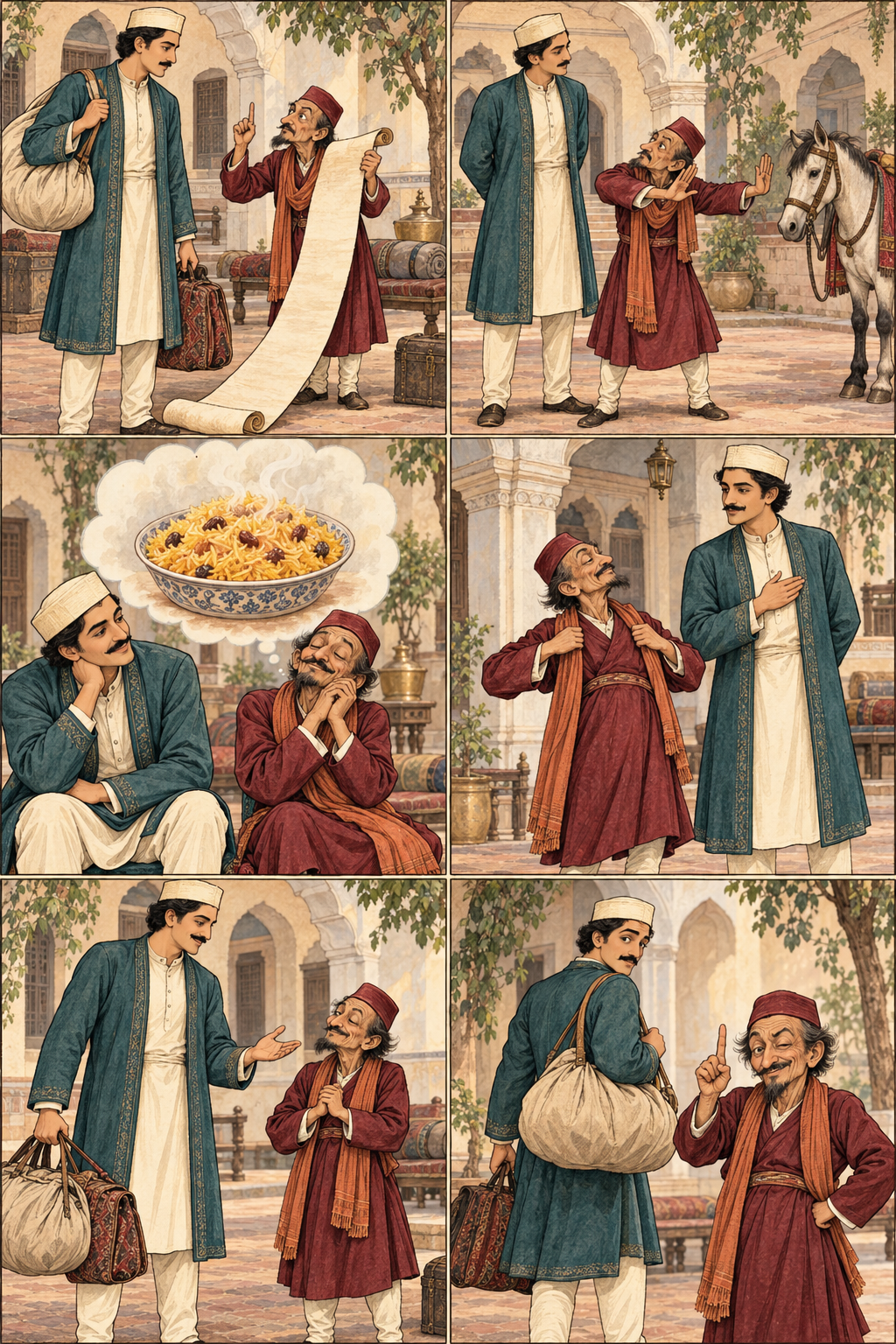
AZAD: Ready?
KHOJI: First, my conditions.
KHOJI: First, my conditions.
आज़ाद: चलें?
खोजी: पहले मेरी शर्तें सुनिए।
खोजी: पहले मेरी शर्तें सुनिए।
KHOJI: No ponies.
Whatever happens!
Whatever happens!
खोजी: टट्टू पर नहीं बैठूँगा।
चाहे कुछ भी हो जाए!
चाहे कुछ भी हो जाए!
KHOJI: Sweet pulao.
Every single day.
Every single day.
खोजी: मीठा पुलाव चाहिए।
रोज़, बिना नागा।
रोज़, बिना नागा।
KHOJI: And call me
Khwaja Sahib!
Khwaja Sahib!
खोजी: और मुझे कहिए
जनाब ख़्वाजा साहब!
जनाब ख़्वाजा साहब!
AZAD: All agreed.
Now shall we go?
Now shall we go?
आज़ाद: सब शर्तें मंज़ूर।
अब तो चलिएगा?
अब तो चलिएगा?
KHOJI: Let me ask Grandmother!
AZAD: She’s still alive?
KHOJI: I’m only joking!
AZAD: She’s still alive?
KHOJI: I’m only joking!
खोजी: दादीजान से पूछ तो लूँ!
आज़ाद: वह अभी ज़िंदा हैं?
खोजी: अजी, दिल्लगी करता था!
आज़ाद: वह अभी ज़िंदा हैं?
खोजी: अजी, दिल्लगी करता था!
Setting: c. 1870s; original serial: 1878–1880. Comic after Sarshar’s Fasana-e-Azad, using Premchand’s Azad-Katha, Part I, section 31, travel-conditions passage. Selected conditions condensed; new captions and English. Publication credit: Newal Kishore Press (p. 3). Original AI-assisted illustrations.[4]
प्रेमचंद के आज़ाद-कथा अनुवाद, भाग एक, खंड ३१ के यात्रा-शर्तों वाले प्रसंग का संक्षिप्त चित्रकथा रूपांतरण। चुनिंदा शर्तें संक्षेप में; संवादों का नया रूपांतरण और नए चित्र।
AWADH AKBAR / अवध अख़बारTHE CITY’S NEXT CHAPTER · शहर का अगला पन्ना
VOCAL FOR LOCAL · स्थानीय हुनर की आवाज़
A little food. A little fun.
थोड़ी ख़रीदारी। ढेर-सी मुलाक़ातें।
The maker behind the object
A city’s creativity lives in the people who stitch, print, cook, design and make. Le Press’s CFCPD vision gives local entrepreneurs a platform to meet Lucknow through curated collections and shared experiences.
Spring Soirée, Teej Festival, Noël and Winter Carnival bring that idea to life: food, fun and shopping in a garden setting, with room to linger and discover.
हर चीज़ के पीछे एक हुनरमंद
शहर की रचनात्मकता उन लोगों में बसती है जो सिलते हैं, छापते हैं, पकाते हैं, डिज़ाइन करते हैं और रचते हैं। ले प्रेस का CFCPD विचार स्थानीय उद्यमियों को चुनिंदा संग्रहों और साझा अनुभवों के ज़रिए लखनऊ से मिलने का मंच देता है।
स्प्रिंग सोइरे, तीज उत्सव, नोएल और विंटर कार्निवल में यही विचार जीवंत होता है: बगीचों के बीच खाना, मस्ती, ख़रीदारी और ठहरकर कुछ नया खोजने का अवसर।
LETTERS TO LE PRESS · ले प्रेस के नामWhat should happen next?
Share your idea ↗What should happen next?
अगली महफ़िल कैसी हो?
Craft, books, music, food, gardens - tell us your idea.
हुनर, किताबें, संगीत, खाना या बगीचे - अपना विचार भेजिए।
अपनी बात कहिए
Ideas go privately to the Le Press team; publication of a reader’s contribution would require their permission. सुझाव ले प्रेस की टीम तक निजी रूप से पहुँचते हैं। पाठकीय योगदान प्रकाशित करने से पहले अनुमति ली जाएगी।
Sources & reading notes · स्रोत और पाठकीय टिप्पणियाँ
- Ulrike Stark, “Politics, Public Issues and the Promotion of Urdu Literature…”, Annual of Urdu Studies 18 (2003), pp. 66–94. The dated briefs refer to pp. 74, 75 and 83.
- Heidelberg University Library: Naval Kishore Press digital collection. The 5,000-title estimate covers the founder’s lifetime.
- Sarshar, Azad-Katha, Part I, §14, Premchand’s Hindi translation. Newspaper passage on p. 4 of this issue.
- Azad-Katha, Part I, §31. Sarai incident, gold-making incident and travel conditions. Newly retold, not verbatim reproductions.
- Frances Pritchett on Shatranj ke Khiladi. Publication in Madhuri, 1924. No modern English translation reproduced.
- British Library: digitised Madhuri records. See the Naval Kishor Press imprint in the catalogue.
- Premchand, Shatranj ke Khiladi, Hindi text. Opening excerpt only; full stories appear separately on pp. 5–8.
- Premchand, “Rashtra ka Sevak,” Hindi Samay. Complete Hindi text, with new paragraphing and a fresh English translation.
- “The Golden Temple at Amritsar,” Sikh News in India, 1864–1924, pp. 654–655. Reprints the 1871 colonial digest of Oudh Akhbar.
- “Maharaja and State of Kapurthala,” Sikh News in India, 1864–1924, p. 291. Reprints the 1875 colonial digest.
Historical spellings include Awadh / Avadh / Oudh and Akbar / Akhbar. All newspaper dates here identify the cited issue, not necessarily the event date. Modern retellings, translations and headlines are identified beside the text. The masthead and comic are new AI-assisted illustrations. Masthead design follows the user-supplied 1 January 1875 reference; it is not an archival facsimile. Research checked 6 October 2026.
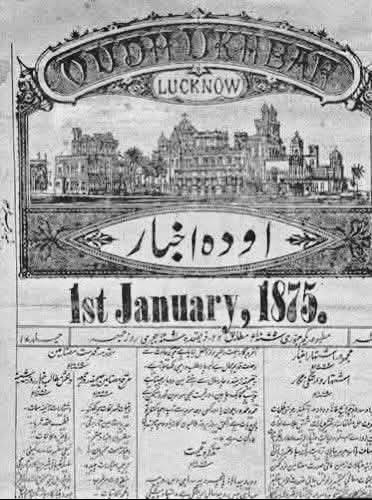
The masthead that inspired this issue
इस अंक के मुखशीर्ष की प्रेरणा
The supplied Oudh Akhbar page is dated 1 January 1875. Its arch, city panorama and ornamental frame guide our new design. The cover illustration is a contemporary interpretation, not a restored archival image.
साझा किए गए पुराने पन्ने पर १ जनवरी १८७५ की तारीख़ है। उसकी मेहराब, शहर का दृश्य और अलंकृत चौखटा हमारे नए डिज़ाइन की प्रेरणा हैं। आवरण का चित्र नया रूपांकन है, मूल की पुनर्स्थापित प्रति नहीं।