A visitor’s guide to the place, its printing legacy and the experiences you can explore today.
What is Le Press in Lucknow?
Le Press is a shopping, dining and cultural destination at the restored Newal Kishore Press campus in Hazratganj, Lucknow. Its 24 partner stores and dining venues, heritage buildings, courtyards and gardens bring together fashion, craft, design, food and cultural experiences.
Contact the relevant store or restaurant for current opening hours and reservations. For campus enquiries, call +91 98101 24469 or email info@lepress.in. Confirm arrangements for your planned visit directly with the team.
The Le Press directory includes fashion, Chikankari, sarees, jewellery, craft, home and lifestyle design. Browse the current partner directory to choose stores before visiting.
Where can I find cafes and restaurants at Le Press?
The dining guide brings together the campus cafes and restaurants, including CIBO and Third Wave Coffee. Follow each venue’s official links for menus, reservations and current updates.
It is an online 3D interpretation of the historic printing works, with 28 departments covering letterpress, typesetting, lithography, engraving, binding, offices, book storage and dispatch. It also includes machinery explanations and links to digitised books.
Yes. The museum is available on this website, with interactive model views, written explanations and narrated stops. The online experience is distinct from an announcement of an on-site museum opening.
Where can I read books published by Naval Kishore Press?
The museum reading room links to the Internet Archive Naval Kishore Press Collection, Heidelberg University Library, Rekhta and eGangotri. Original archive records provide publication details and available scans.
The Living Lab combines the 3D campus with interactive sustainability learning and a QR-enabled guardian quest. Visitors can explore checkpoints, clues and digital collectibles through the website.
How does Le Press connect heritage and sustainability?
The Green Story explains adaptive reuse, retained building materials, courtyards, trees, trellis shading, rainwater harvesting and wastewater reuse. It separates published project figures from the assumptions used in the digital climate study.
Are guided Lucknow heritage tours available to book?
The heritage-tour page currently presents a coming-soon experience. Register interest and check the latest announcement with Le Press before making travel or booking plans.
Use the events page for campus announcements and follow the official Instagram handle @lepress_lucknow. The community page welcomes ideas from visitors and local makers.
Can I experience augmented reality at Le Press for free?
Yes. Six guardian stops with interpretive AR and 3D scenes are available through the website, with no paid visitor subscription or separate Le Press app. Use Chrome on a supported Android phone or Safari on iPhone, open a scene and follow its AR instructions. If your device does not support AR, explore the 3D view instead. Mobile data charges may apply.
Are Newal, Nawal and Naval Kishore Press the same historical press?
These spelling variants refer to the Lucknow publishing house established by Munshi Newal Kishore in 1858. Le Press uses Newal Kishore Press in its museum branding; archive catalogues may use Naval or Nawal Kishore Press. Follow the original catalogue record when citing a particular book.
Open the Le Press Passport. The six guardians are Aqua at the fountain, Ember in the chimney courtyard, Spark in the arched verandah, Terra near the public toilets, Canopy near the Big Barn and Bloom along the bougainvillea terraces. Use each installed QR sign to explore its encounter and collect your discovery. Progress is saved on your device.
Does the virtual campus automatically line up with the real buildings?
Phone GPS gives an approximate starting position. Camera AR needs a compatible device and permission, then on-site alignment with the chimney reference. The model is an interpretive reconstruction, not a surveyed building record or a permanently anchored overlay. You can explore the 3D museum without allowing camera or location access.
The Story Studio places your photo beside a digital reconstruction of Munshiji in the arched corridor. Photo composition happens on your device. Download or share the finished card and add @lepress_lucknow in your social app; it is a creative keepsake, not a real historical photograph.
Khadim offers website guides and optional AI answers, plus an enquiry form for the Le Press team. Ask about visits, dining, shopping, events, Rangmanch or creator collaborations. AI answers can make mistakes; the team or individual partner confirms bookings, availability and changing arrangements.
Munshi Newal Kishore founded the printing house in Lucknow in 1858. The family business continued through later generations, including Tej Kumar Bhargava. Le Press was established by Rani Nita Dube, née Bhargava, daughter of Tej Kumar Bhargava and inheritor of Shree Tej Kumar Printing Press Private Limited. Its adaptive reuse brings shops, dining and culture into the historic campus while the online museum explores the publishing legacy.
Le Press’s campus information is maintained by the Le Press team. Historical research and original book scans are linked in the museum. Heidelberg University Library records the press’s founding in 1858; Sustainability Next provides the published project account discussed in the Green Story.
Visitor information reviewed: 4 November 2026. For changing visit arrangements, contact the campus team or the individual venue.
THE CFCPD MANIFESTO · GAURAV VATSA
Living heritage. A digital future.
The CFCPD Manifesto Gaurav Vatsa
Le Press is a metaverse-enabled heritage destination in Hazratganj, Lucknow. Its browser-based 3D campus, Newal Kishore Press Virtual Museum and QR-enabled collectibles connect the physical place with an interactive digital experience.
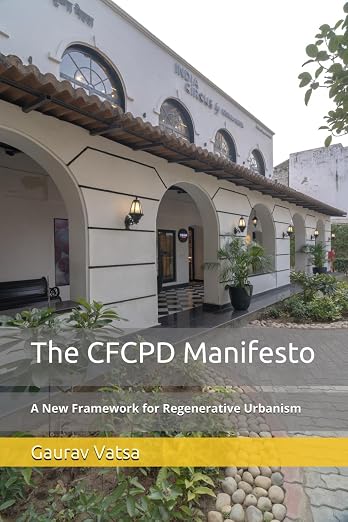
This vision puts The CFCPD Manifesto: Culture, Finance, Community, Planet, Digital — A New Framework for Regenerative Urbanism into practice. Written by Gaurav Vatsa, the architect of the Le Press development, the book connects five dimensions of a place’s continuing life.
Culture: preserve the printing legacy and open its stories to new audiences.
Finance: give restored buildings useful commercial life and local enterprises a platform.
Community: bring visitors, makers and readers together.
Planet: extend the life of existing buildings and explore climate-conscious design.
Digital: make heritage accessible through virtual tours, archival reading and playful discovery.