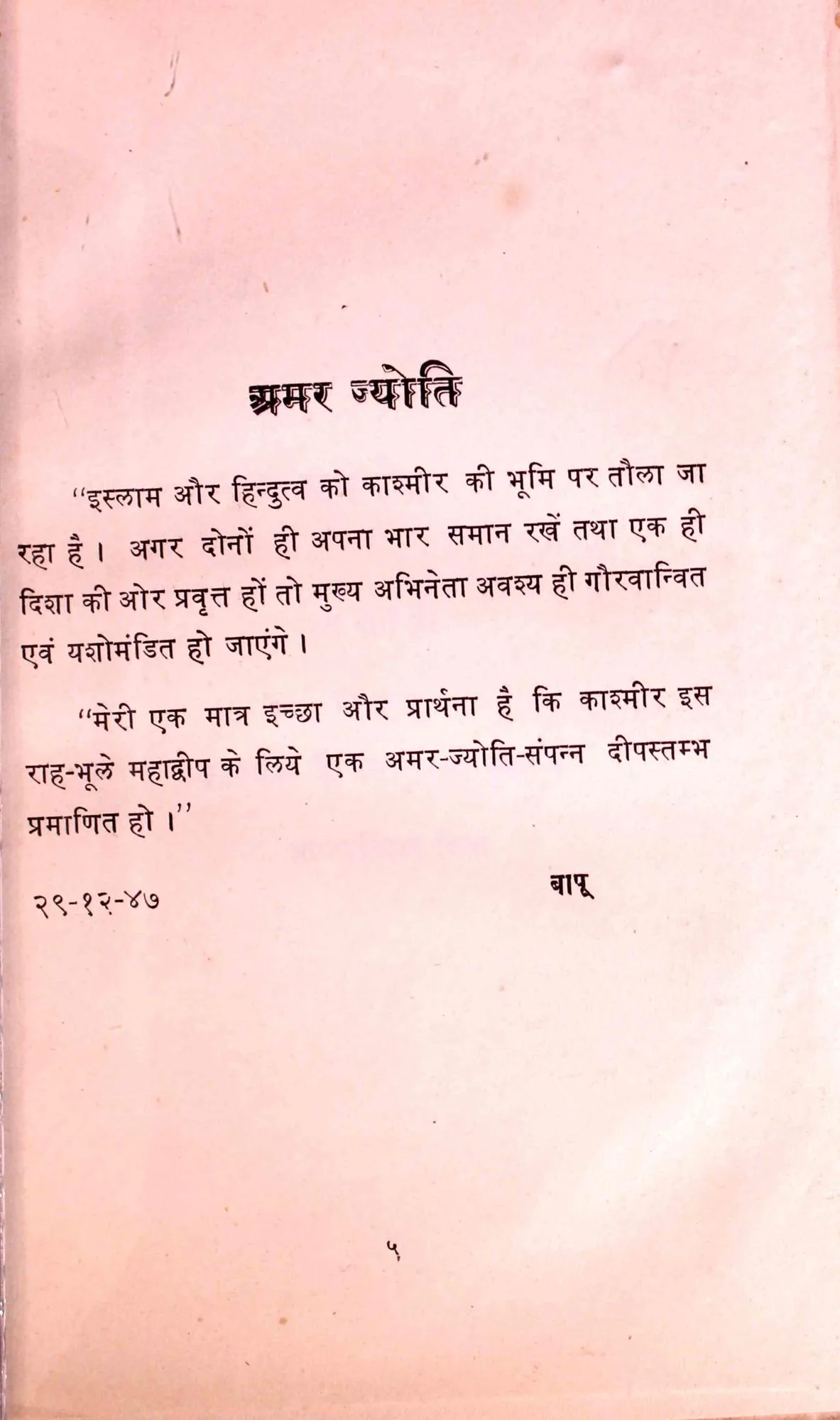
1947 · 29 December, as dated in the book
A hope for shared life
साझे जीवन की आशा
Printed p. 5 · Enlarge original page ↗
The opening pages reproduce a message attributed to Gandhi, signed “Bapu”. It expresses the hope that Hindus and Muslims might move in a common direction and that Kashmir might become a guiding light for the subcontinent. Placed before the political chapters, it offers a striking counterpoint to the conflict discussed later.
हिन्दी में पढ़ें
आरम्भिक पन्नों में “बापू” के नाम से प्रकाशित संदेश हिन्दुओं और मुसलमानों के साथ आगे बढ़ने की आशा व्यक्त करता है। कश्मीर को उपमहाद्वीप के लिए मार्गदर्शक प्रकाश बनने की कामना, आगे आने वाले संघर्ष-विवरण से एक मार्मिक संवाद बनाती है।
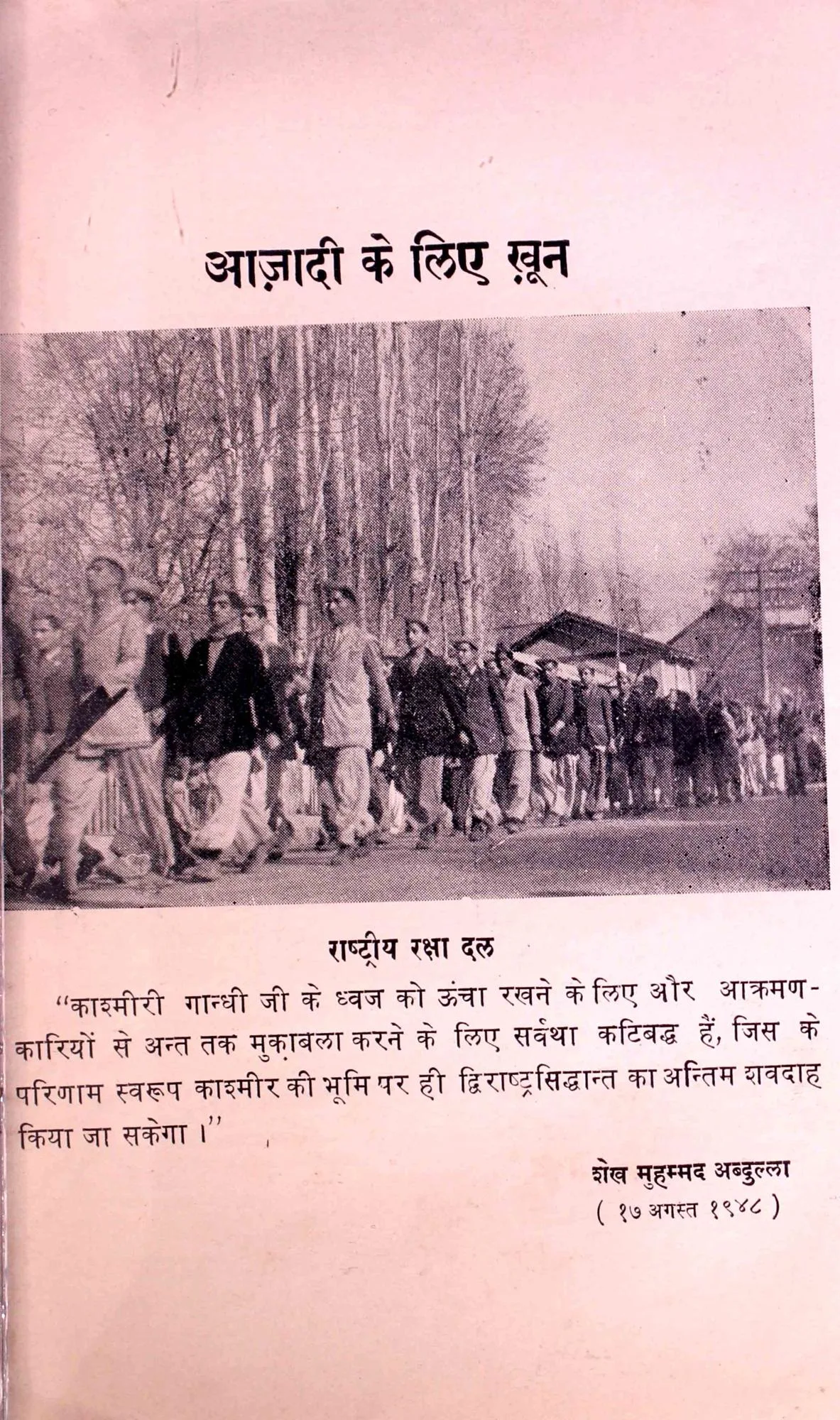
1948 · 17 August, caption attribution
A photograph of the National Defence Corps
राष्ट्रीय रक्षा दल की तस्वीर
Unnumbered photographic plate · Enlarge original page ↗
Under the heading “आज़ादी के लिए ख़ून”, the book presents a photograph captioned “राष्ट्रीय रक्षा दल”. A statement attributed to Sheikh Muhammad Abdullah accompanies it, describing determination to resist attackers. The page records how collective defence was represented in the publication; it does not identify the individual people in the photograph.
हिन्दी में पढ़ें
“आज़ादी के लिए ख़ून” शीर्षक के नीचे “राष्ट्रीय रक्षा दल” की तस्वीर है। साथ में शेख मुहम्मद अब्दुल्ला के नाम से दिया गया वक्तव्य आक्रमणकारियों का सामना करने के संकल्प को व्यक्त करता है। तस्वीर के व्यक्तियों के नाम इस पृष्ठ पर नहीं दिए गए हैं।
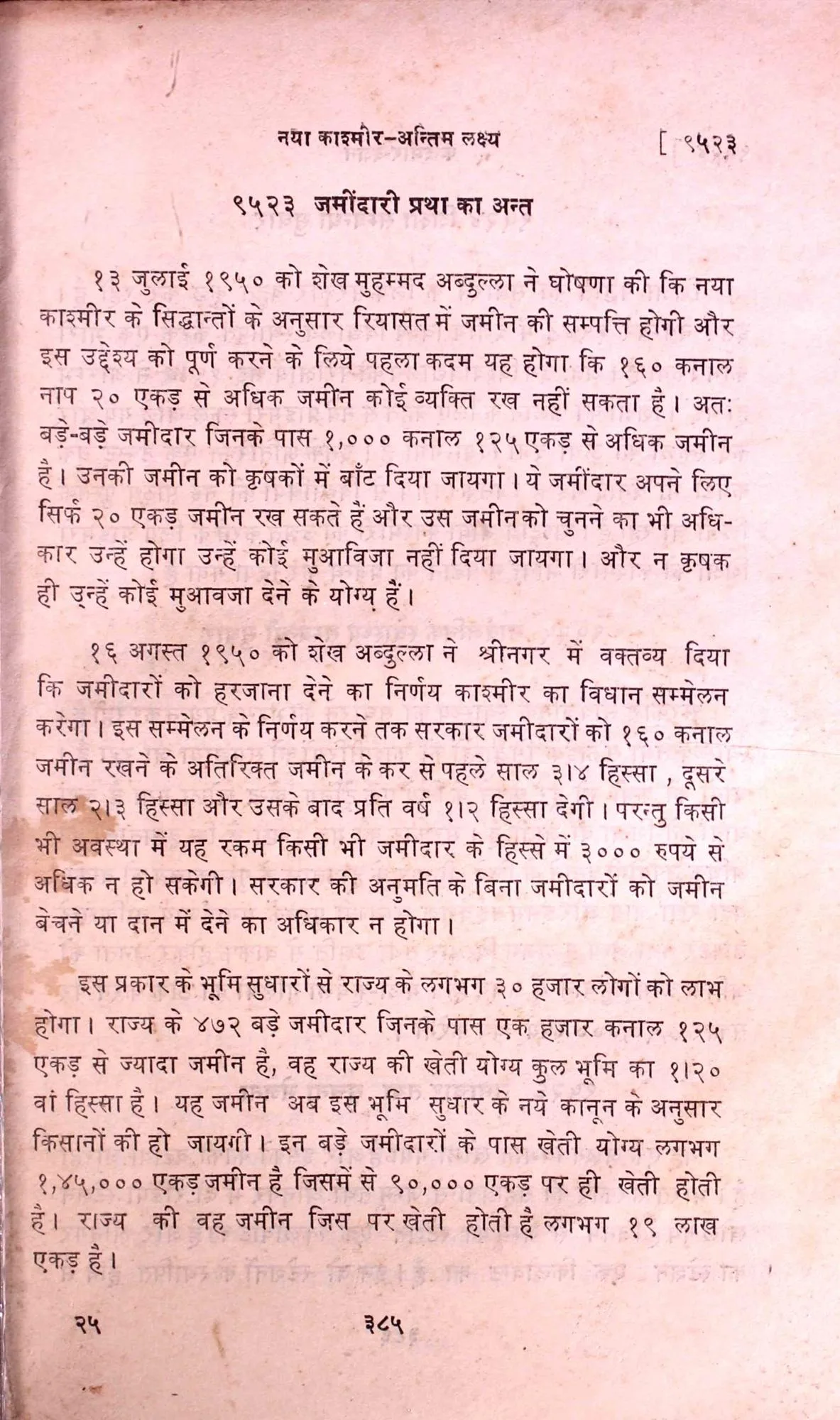
1950 · 13 July announcement reported
Land ownership becomes a central question
ज़मीन का सवाल
Printed p. 385 · Enlarge original page ↗
The land-reform section reports Sheikh Abdullah’s announcement of a ceiling of 160 kanals, described in the book as 20 acres, with land from large holdings to pass to cultivators. It also records a later statement, dated 16 August 1950, on how compensation would be considered. Read together, the paragraphs show policy being argued and revised, rather than a single settled declaration.
हिन्दी में पढ़ें
भूमि-सुधार के प्रसंग में पुस्तक 13 जुलाई 1950 की घोषणा का उल्लेख करती है: 160 कनाल, जिसे यहाँ 20 एकड़ बताया गया है, की सीमा और बड़ी जोतों की ज़मीन कृषकों में बाँटने का प्रस्ताव। उसी पृष्ठ पर 16 अगस्त के वक्तव्य में मुआवज़े पर आगे निर्णय की बात है। दोनों विवरणों को साथ पढ़ने पर नीति-निर्माण की जटिलता सामने आती है।
POST-WAR DIPLOMACY · the book’s account
Dixon and the difficulty of agreement
डिक्सन और समझौते की कठिनाई
Printed p. 311 · Enlarge original page ↗
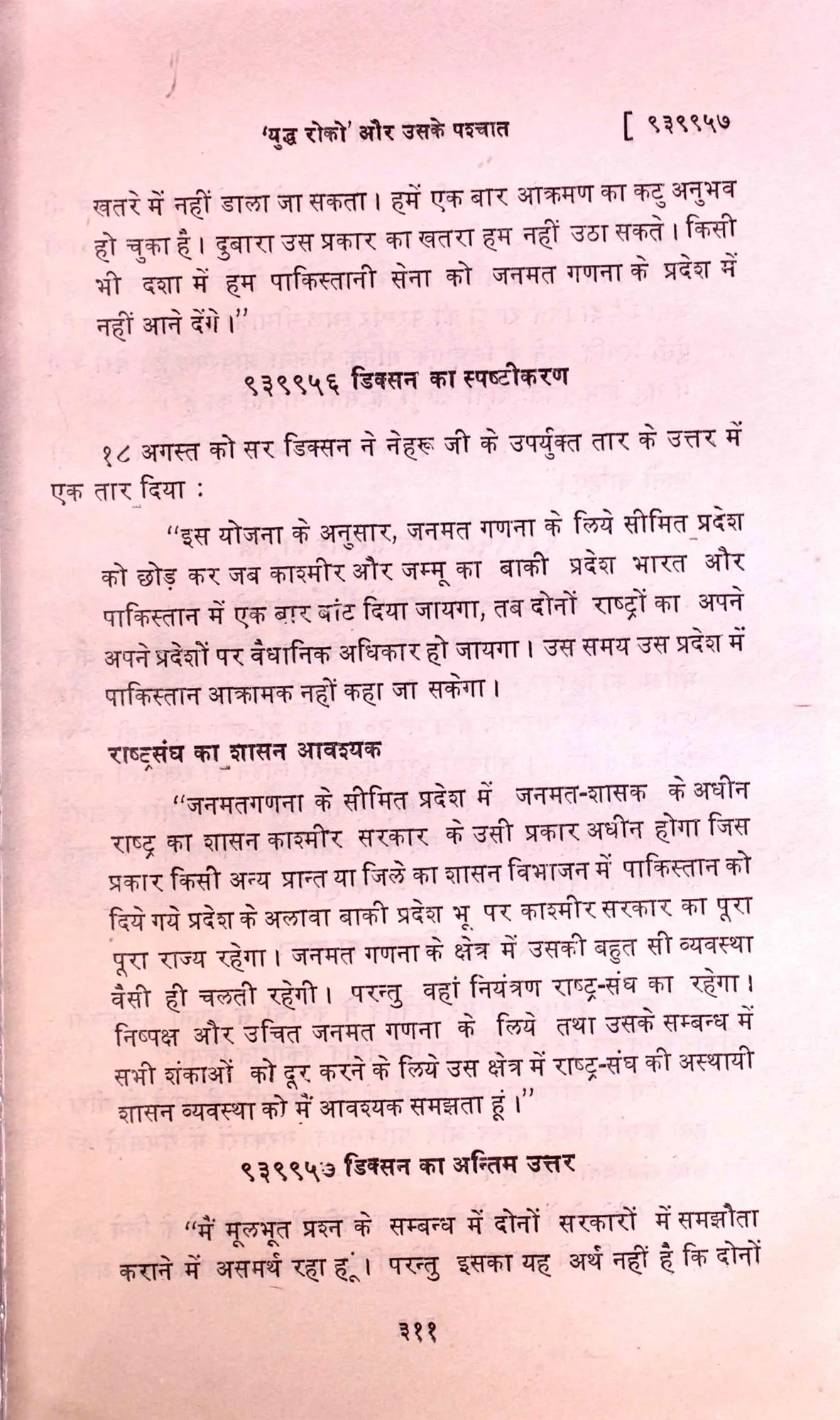
In the chapter on the ceasefire and its aftermath, a section titled “डिक्सन का स्पष्टीकरण” reproduces a proposal for temporary United Nations administration in a limited plebiscite area. The page then begins a section headed “डिक्सन का अन्तिम उत्तर”, reporting his inability to secure agreement on the fundamental question. The reply continues beyond this page: the fragment is not presented here as a complete statement.
हिन्दी में पढ़ें
“डिक्सन का स्पष्टीकरण” में सीमित जनमत-गणना क्षेत्र में अस्थायी संयुक्त राष्ट्र प्रशासन का प्रस्ताव मिलता है। इसके बाद “डिक्सन का अन्तिम उत्तर” शीर्षक के अंतर्गत मूल प्रश्न पर समझौता न करा पाने की बात शुरू होती है। उत्तर अगले पृष्ठ पर जारी है; इस अंश को पूरा वक्तव्य नहीं माना गया है।
1951 · 28–29 March statements reported
The dispute reaches Parliament and the Security Council
संसद और सुरक्षा परिषद में बहस
Printed p. 335 · Enlarge original page ↗
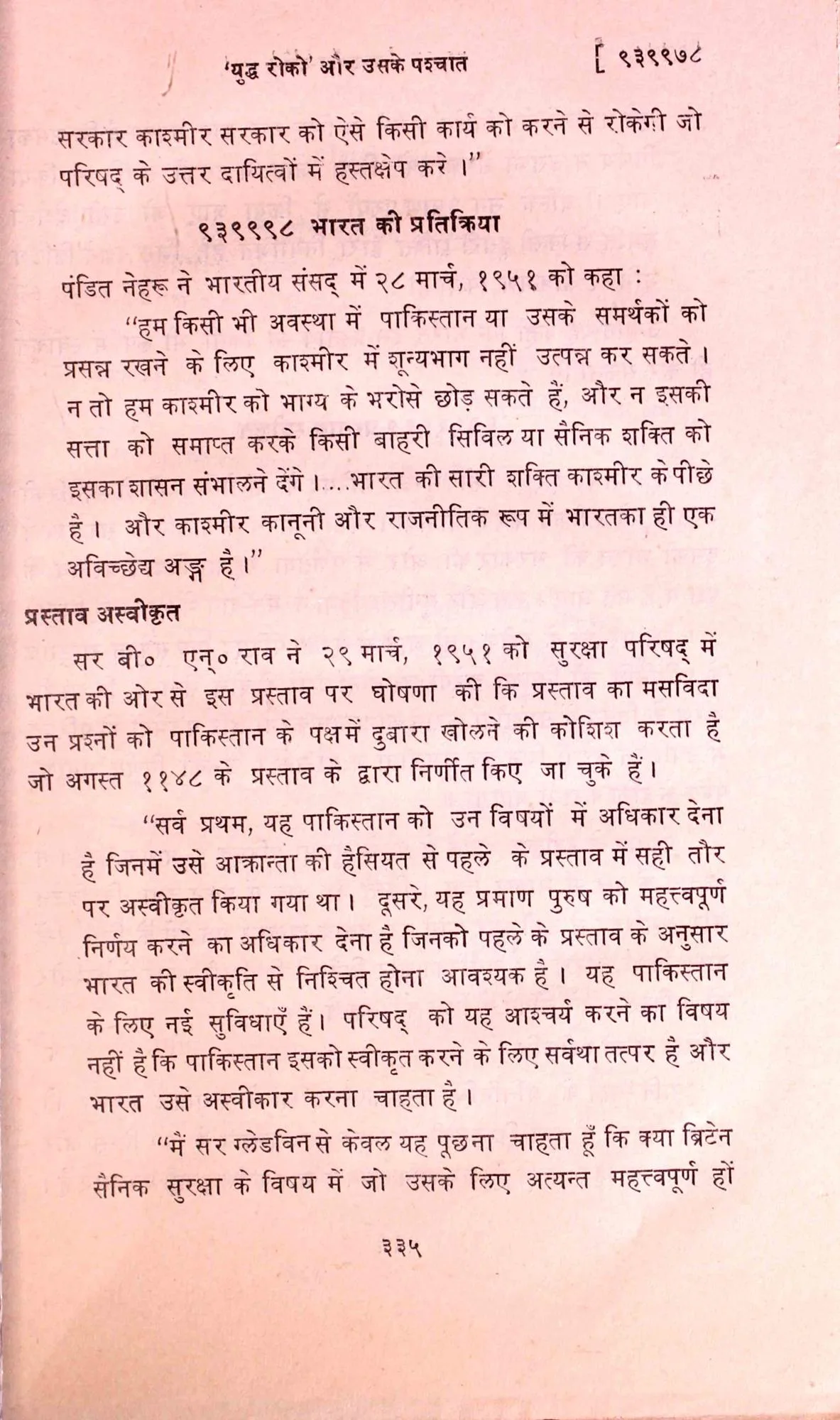
The book attributes a statement of 28 March 1951 to Jawaharlal Nehru rejecting the removal of Kashmir’s administration in favour of an outside civil or military authority. It then records B. N. Rau’s objections at the Security Council on 29 March. These passages preserve the Indian position as selected and presented by the author, not an independent adjudication of the dispute.
हिन्दी में पढ़ें
पुस्तक 28 मार्च 1951 का नेहरू का वक्तव्य देती है, जिसमें कश्मीर का प्रशासन किसी बाहरी नागरिक या सैनिक शक्ति को सौंपने का विरोध है। इसके बाद 29 मार्च को सुरक्षा परिषद में बी. एन. राव की आपत्तियाँ दर्ज हैं। ये लेखक द्वारा प्रस्तुत भारतीय पक्ष के वक्तव्य हैं, विवाद का स्वतंत्र या अंतिम निर्णय नहीं।
PUBLIC LIFE · reported in the 1951 edition
News for people without a radio
जिनके पास रेडियो नहीं, उनके लिए समाचार
Printed p. 387 · Enlarge original page ↗
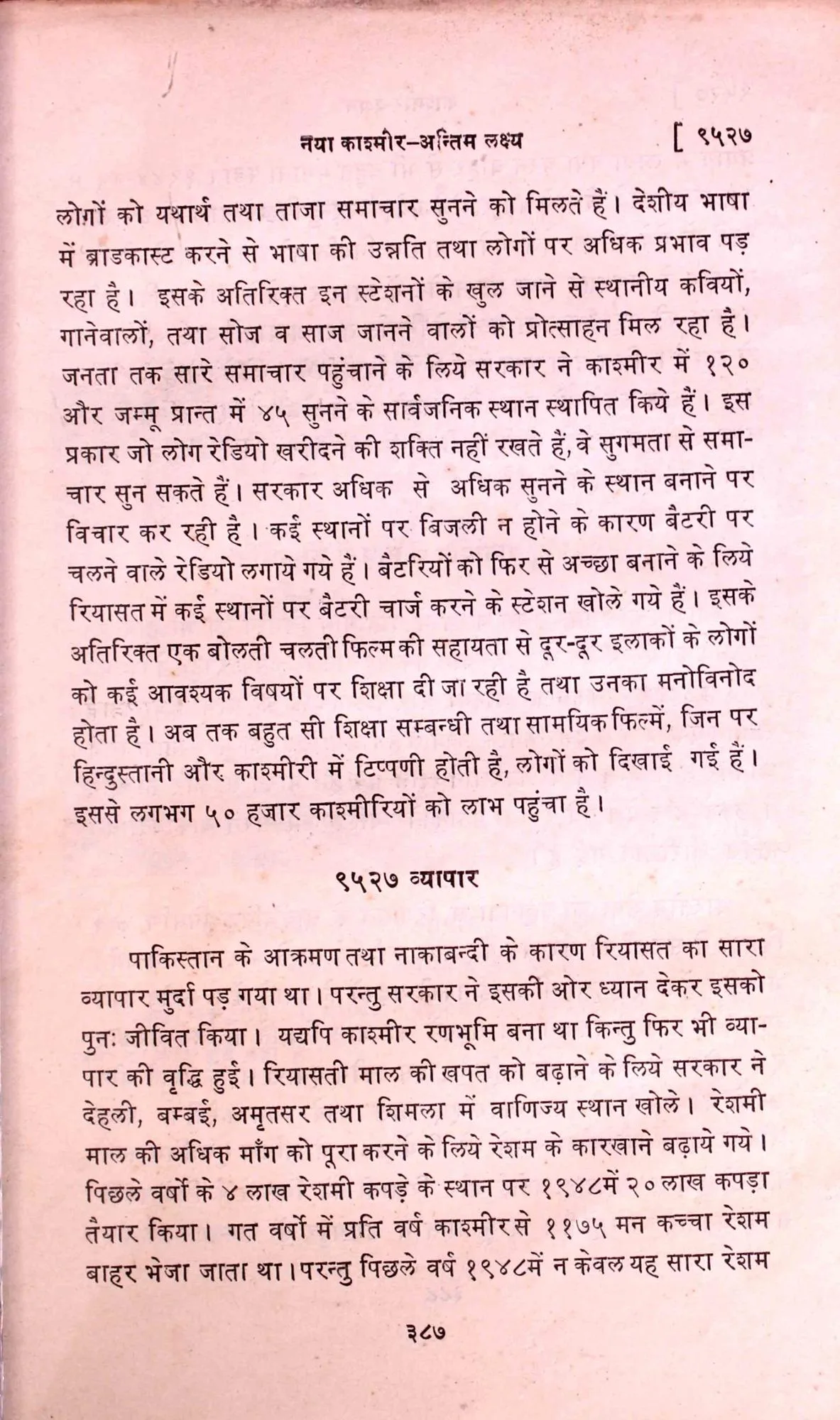
The publication reports 120 public listening places in Kashmir and 45 in Jammu, with battery-operated radios where electricity was unavailable. It also describes charging facilities and travelling educational films with Hindustani and Kashmiri commentary. Alongside high diplomacy, the book records the practical work of reaching an audience. The figures are the book’s own reported totals.
हिन्दी में पढ़ें
पुस्तक कश्मीर में 120 और जम्मू में 45 सार्वजनिक श्रवण-स्थलों का उल्लेख करती है। बिजली न होने पर बैटरी वाले रेडियो, उन्हें चार्ज करने की व्यवस्था और हिन्दुस्तानी तथा कश्मीरी टिप्पणी वाली चलती-फिरती शैक्षिक फिल्मों का विवरण भी है। ये आँकड़े पुस्तक में प्रकाशित विवरण के रूप में दिए गए हैं।
The book behind the reports
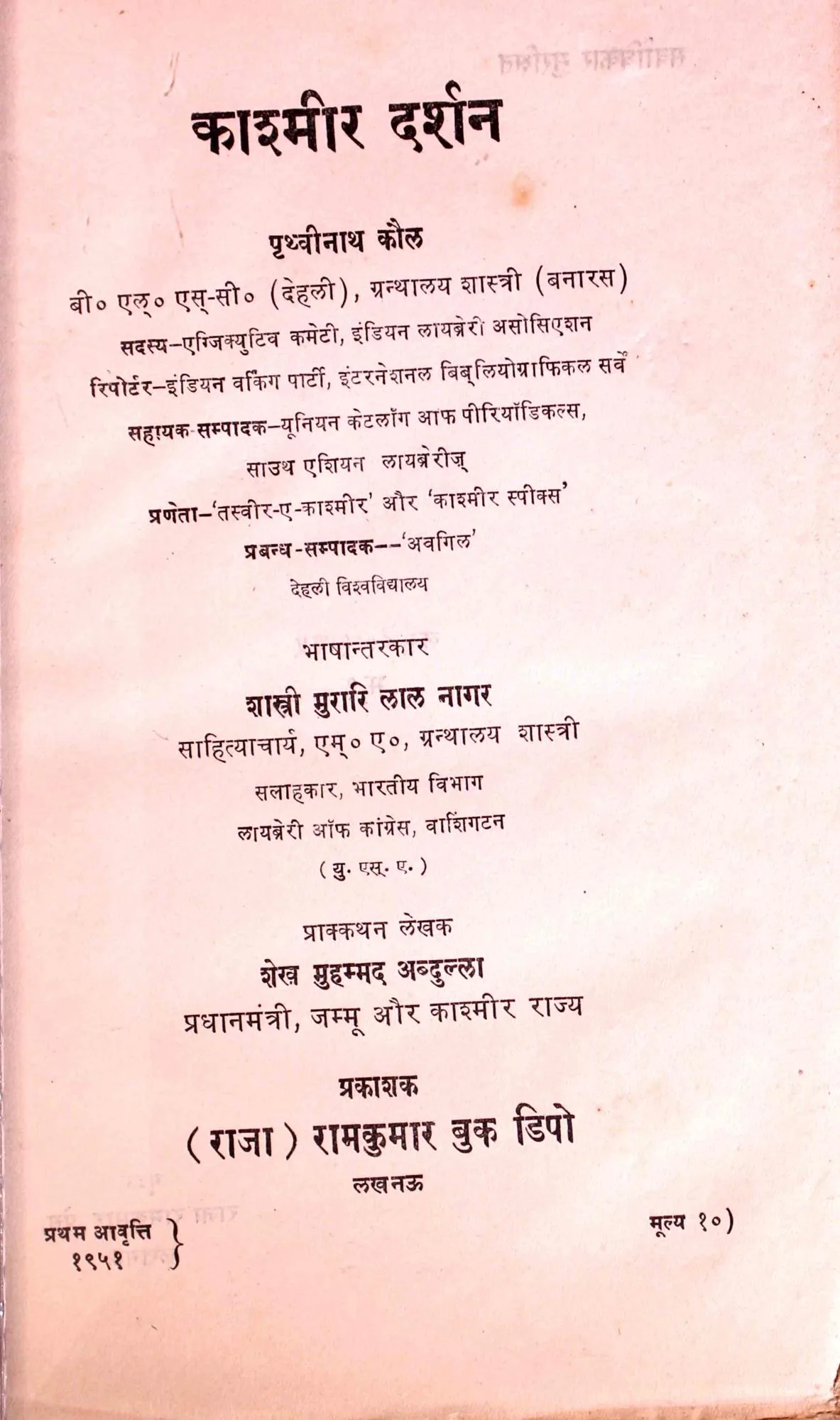
Author: Prithvinath Kaul · पृथ्वीनाथ कौल
Hindi translator: Shahi Murari Lal Nagar · शाही मुरारि लाल नागर
Foreword: Sheikh Muhammad Abdullah
Publisher as printed: (Raja) Ramkumar Book Depot, Lucknow
Edition: First edition, 1951.
Selected scans supplied from the Le Press collection. The digital excerpt is incomplete; the page numbers above are the book’s printed page numbers, not PDF positions. Dates describe statements or captions where specified, not the date of every event pictured.
The book takes a political position. We retain attribution and distinguish its reports from present-day editorial interpretation. This feature is not a complete history of the Kashmir conflict. The original publisher credit is reproduced without assigning an unverified printing-house attribution.
Continue with Awadh Akbar ↗