What happens to a book of living people once it leaves the printer? A judge takes a new post. A newspaper editor receives an honour. Someone who merited a few lines three years earlier now requires a page. Writing from Lucknow in June 1914, Prag Narain Bhargava said that patrons had been asking for another instalment of Who’s Who in India since the first supplement appeared in June 1912. He wanted readers in India and overseas to be able to find these people.
The volume opens in Kheri with Kunwar Bam Bahadur Shah. Before the reader has finished the first paragraph, the Press gives a direction to an older book. For the family history, turn to page 88 of Part IV of the principal work, where the entry is under Rani Surat Kunwar. Someone who kept the earlier volume could now read one estate through the lives of two people. The same editorial device works on a smaller scale in the Press’s own city.
The newspaper office with a reading room
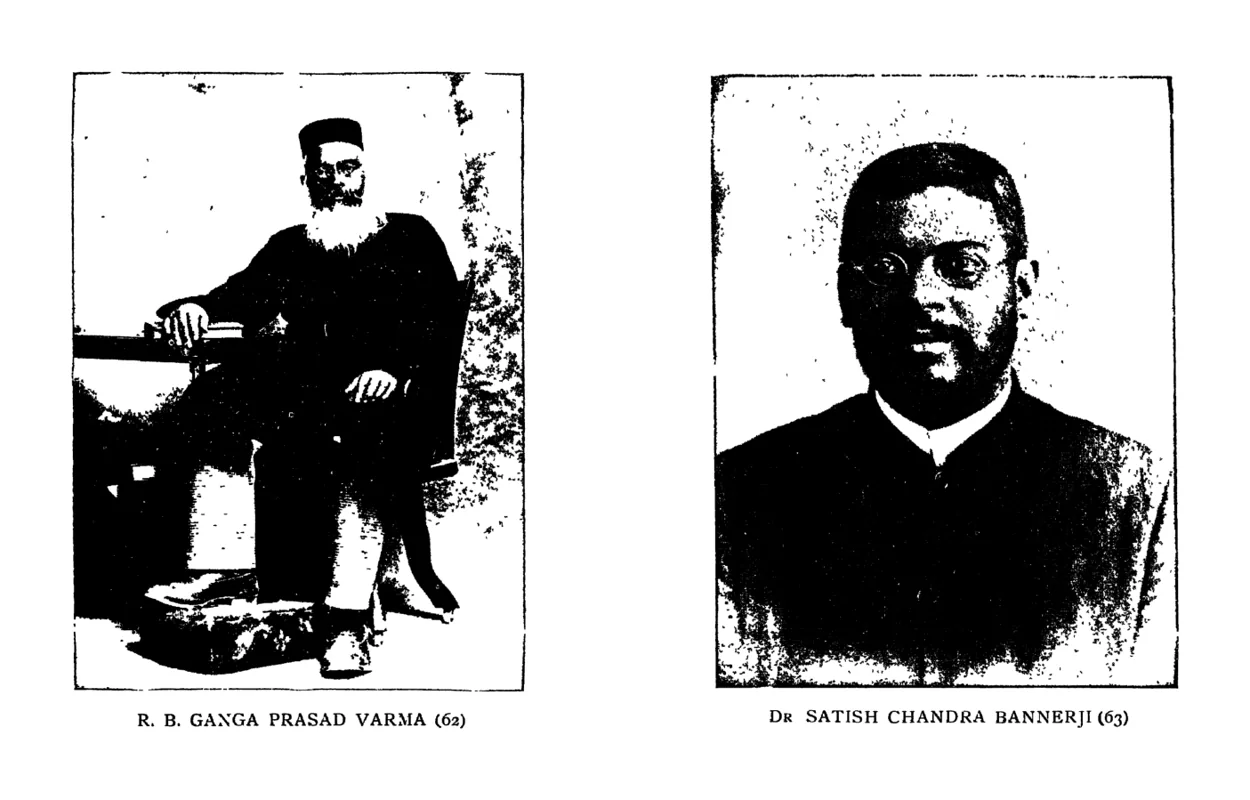
Look up Ganga Prasad Varma on page 62. The editor of The Advocate was also senior vice-president of the Lucknow Municipal Board and a member of the provincial legislature. These are familiar ingredients in a directory entry. What has changed since the original notice? On the next page we learn that he received the title of Rai Bahadur in June 1912. Between the two pages comes his portrait, seated beside a small table, with the page number of his entry beneath his name.
Follow the reference back to Part IV, page 217, of the 1911 volume and a Lucknow street comes into view. Varma had represented Saadatganj ward on the municipal board. The account credited him with a park, a clock tower and a fountain in Aminabad. At his Lucknow offices he maintained a free library and reading room. He had founded the weekly Hindustani in 1883. For a visitor walking through Lucknow’s printing quarter today, the reading room is perhaps the detail to keep. Even someone who could not afford a newspaper of their own had a place where they could read.
A chemist reads his way back to school
Prafulla Chandra Ray’s entry in the Bengal pages begins at a village school kept up by his father. The family moved to Calcutta to educate the children. A prolonged illness interrupted Ray’s schooling, but the household had a well-stocked library. His biographer recalled him saying how much he had learnt while he was too unwell to attend class. For once, the most formative stage in a distinguished education took place at home.
Later, at Presidency College in Calcutta, he investigated Indian fats and oils and published research on the compounds produced when nitric acid acts on mercury. The profile also names his two-volume history of Indian chemistry and the Bengal Chemical and Pharmaceutical Works. These details give three distinct meanings to the word chemist in this life. Ray could work an experiment at a bench, recover an older tradition from texts and help put chemistry to work in a manufacturing concern. The directory’s closing address in Calcutta belonged to a figure active in all three worlds.
Two men who kept the telegraph running
A telegraph message arrived without the names of the people who carried it. Page 128 supplies one. Nur Uddin had taught at the telegraph training class in Lahore, staffed frontier offices and served in the camps of viceroys. After duty at the Delhi Durbar of 1903, he went with the Seistan Arbitration Commission and took charge of several telegraph offices. By the time this volume appeared, a correspondent could reach him in charge of the government telegraph office at Patiala.
On page 170 another telegraph officer, Pritamdas Hukumat Rai Shahani, can be found in Bombay. His work had taken him to field telegraph offices in the north-west and to Bombay during the coronation season of 1911–12. The notice then records two books he had written in Sindhi. One was a novel about Hindu life in Sind that criticised social practices. In a list of technical appointments it would be easy to lose the novelist. Here the two occupations survive together, followed by a single address at the telegraph office in the Fort district.
Sarojini Naidu remembers an algebra problem
Sarojini Naidu’s entry lets a subject speak for herself. A girl of eleven was struggling with algebra. The sum refused to come right, she remembered, and a poem came to her instead. Her father wanted her to pursue mathematics or science. Her mother had written lyrics in Bengali as a young woman. By preserving both details, the Lucknow account gives a family history to a moment that might otherwise sound like a charming legend of early genius.
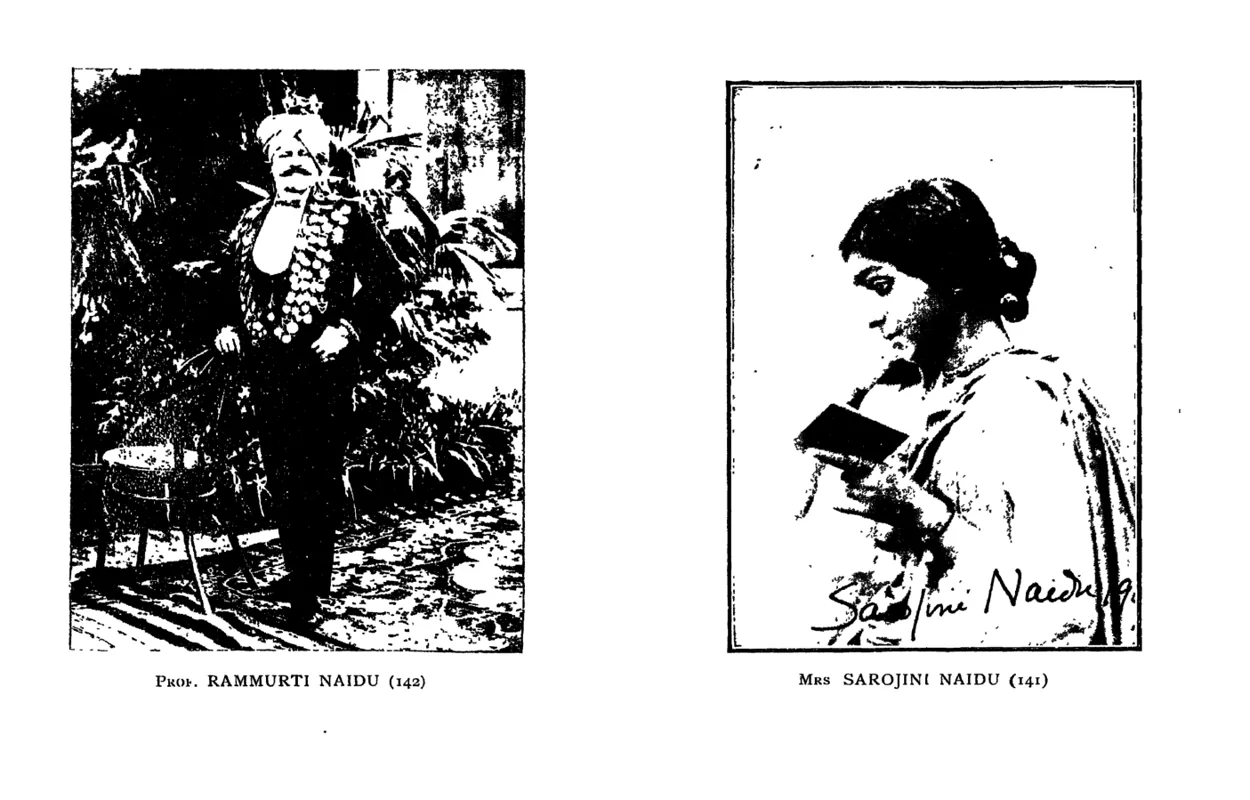
The notice follows her from Hyderabad to studies in England and back to India. In 1914 its writer knew her as a poet and was already listening to her speak in public. In the portrait plate that follows, Naidu looks down at an open book. Her signature runs along the lower edge of the picture. Elsewhere it can be hard to tell how much a subject contributed to the account written about them. Here we have a recollection attributed to Naidu and a page on which she appears as a reader.
The Urdu readers of Meerut
Near the end of the volume a teacher’s address, Oriental House, Meerut, closes a life spent working with words. Maulvi Muhammad Ismail had studied Persian and Arabic privately, entered the Education Department at sixteen and written a series of Urdu readers. The compiler credited their popularity to the care with which the lessons advanced in difficulty. Ismail had also edited the Meerut newspaper Najm-ul-Akhbar during the Russo-Japanese War. In retirement he continued to manage the girls’ school he had founded.
His entry leads to a question the book cannot settle. Who were the children who first learnt to read Urdu from those lessons? The directory allows us to look up their teacher by name, follow his career across two pages and see which honour he received. His pupils survive here as a readership. Their schoolbooks would tell another part of the history that this Lucknow press put within reach.