FIRST, A LITTLE LUCKNOWI HUMOUR
Gaadi kahan par le? LE PRESS!!!
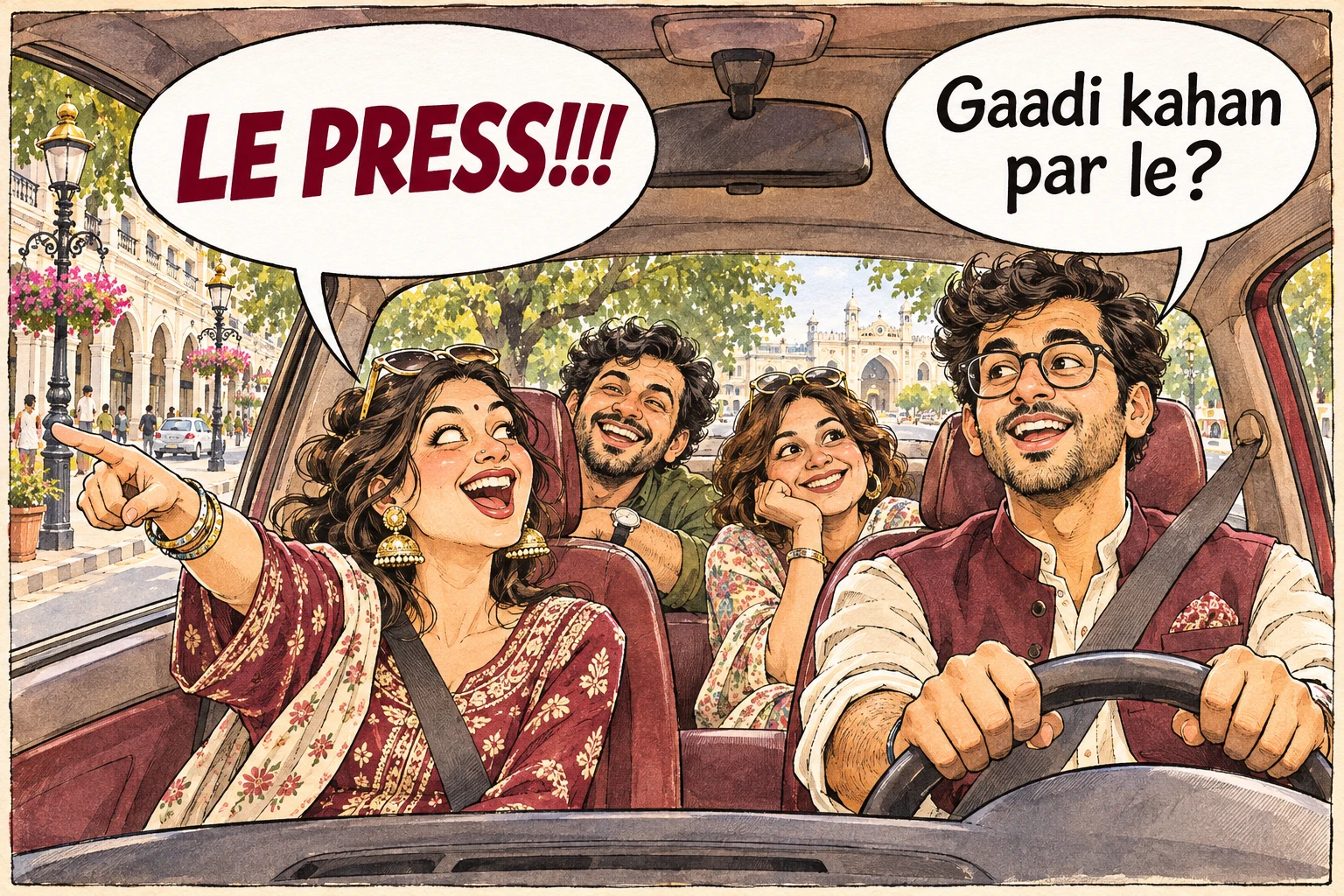
A little French, a little Hindi, and a whole lot of Lucknow. Sometimes the name just finds its own destination. But behind this little joke lies a much more interesting story.
AI-generated editorial illustration, created for Le Press.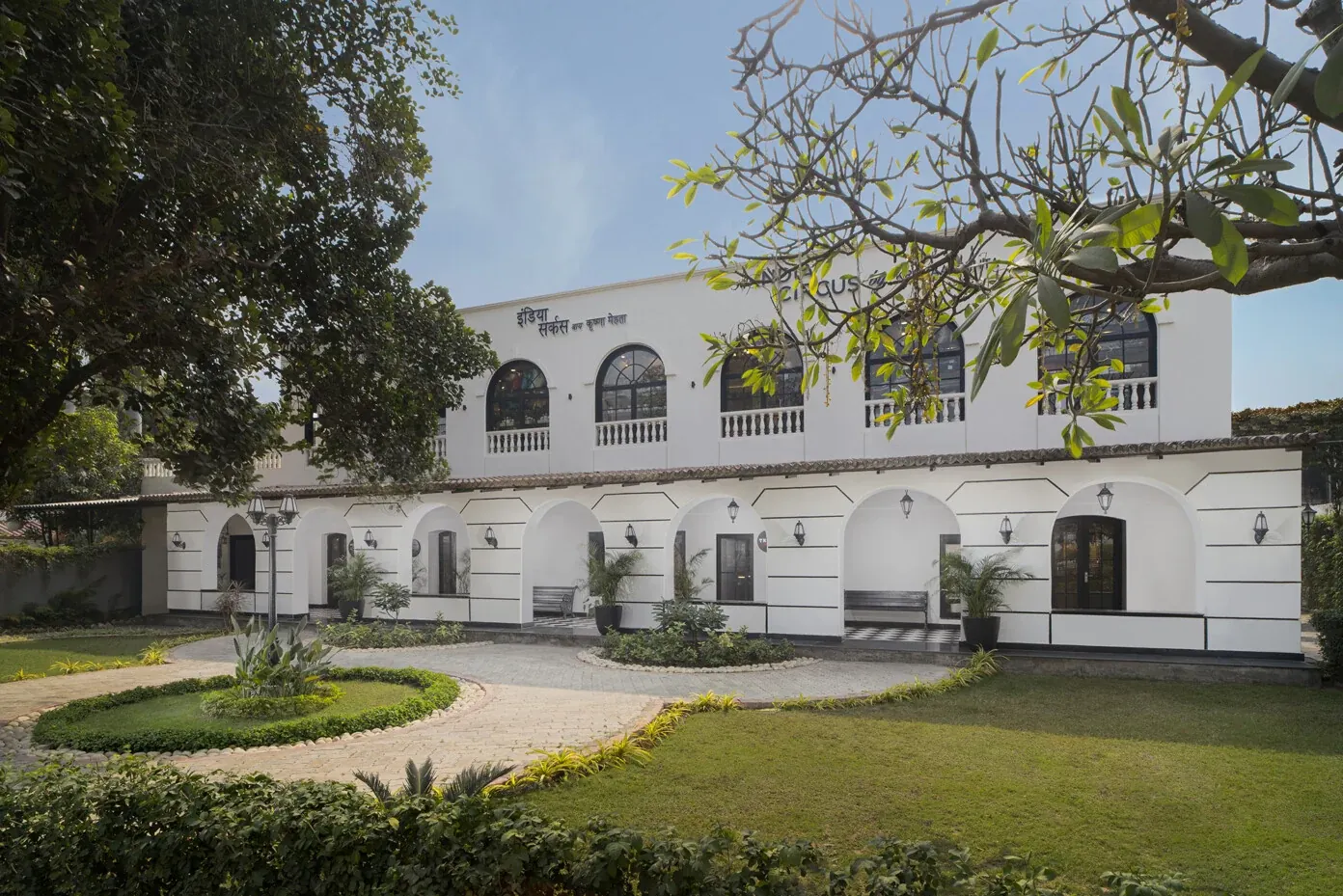
Behind the joke, a question asked with affection
At the 2025 edition of Metaphor Lucknow LitFest, storyteller Himanshu Bajpayee raised a question that deserves to be answered with affection and respect. In essence, he asked why a place founded by a stalwart such as Munshi Newal Kishore should be called Le Press rather than Newal Kishore Press, as an ode to the man who founded it in 1858.
It was a question born of reverence for our shared inheritance. The answer, we believe, lies in why Lucknow is Lucknow.
Lucknow: a city made by encounters
Lucknow is not defined by a single language, faith, architectural tradition or culinary vocabulary. Its identity grew through encounters. Persianate courtly culture, Hindustani literature, the Ganga-Jamuni ethos, music, poetry, embroidery and European influences have all entered into conversation here. Claude Martin’s Constantia and the city’s Indo-European architectural heritage are visible examples of that layered identity. Lucknow made those encounters its own.
Being open to the world does not make Lucknow less Indian. It is one of the reasons Lucknow is so distinctly Lucknowi.
Munshi Ji's global vision began in 1858
Munshi Newal Kishore established his publishing house in the aftermath of 1857. His enterprise was rooted in Lucknow, but his intellectual field was far wider. The Press brought together writers, scholars, translators and calligraphers. Heidelberg’s research bibliography records approximately 5,000 titles published during his lifetime in languages including Hindi, Urdu, Arabic, Persian, Sanskrit and English.
He recognised that knowledge could travel between communities, languages and generations when people had access to the printed word. His publishing programme included diverse religious, literary and scholarly traditions. As historian Ulrike Stark’s work demonstrates, the Press became an important institution in the circulation of books and ideas across South Asia. Today its legacy is studied and collected internationally.
The greatest tribute to a visionary is not merely to preserve his name. It is to carry forward his vision.
Three chapters, one inheritance
Newal Kishore Press is the historical name of the enterprise founded in 1858. The family business continued through succeeding generations, including Tej Kumar Bhargava and Tej Kumar Press. With the transformation of printing and publishing, the historic campus acquired a new purpose. Under Rani Nita Dube, née Bhargava, the heritage buildings became the setting for Le Press, a contemporary place for culture, commerce and community.
These identities tell different chapters of one inheritance. We do not retrospectively rename publications, historical records, the founding institution or the contribution of its successors. The Newal Kishore Press Virtual Museum proudly carries the founder’s name. Le Press is the identity of the destination today.
Why the name Le Press?
The French article Le, meaning ‘the’, sits alongside the English word Press. The combination is a contemporary brand expression, not a claim to be a traditional French phrase or an assertion of French origins. It invokes the international outlook of the city while retaining the word shared by Newal Kishore Press and Tej Kumar Press.
Its brevity makes room for everyone who encounters the place, from Lucknow's residents to visitors from elsewhere. Its roots remain unmistakable: the physical fabric, the founder’s story, the historic publications and the continuing cultural purpose.
From printing ideas to creating encounters
Where printing presses once gave words a journey beyond the city, the restored campus now creates opportunities for people to meet. Through literature festivals such as Metaphor, Rangmanch, craft, art, cafés, gardens and the digital museum, the ambition is to turn heritage into a living experience rather than a memory sealed behind glass.
Conservation safeguards the setting; cultural programming gives it contemporary life. Our commitment is to keep the story of Munshi Newal Kishore visible, accessible and meaningful for new generations.
Rooted in Lucknow. Open to the world.
Himanshu Ji’s question reminds us that a modern brand must never allow its original story to disappear. That is why we recognise both identities clearly: Newal Kishore Press, the founding publishing institution; Le Press, its contemporary cultural expression.
Newal Kishore Press was Lucknow’s window to the world. Le Press seeks to make Lucknow a destination for the world.
LE PRESS
Home of the Newal Kishore Press legacy, since 1858.